Great News Daily. All the news that’s fit to uplift.

No. 3AI & Tech edition ↗
Good news. Eyes open.

Real progress, curious people and useful ideas. A short read with sources, a sense of humor, and no obligation to pretend everything is fine.

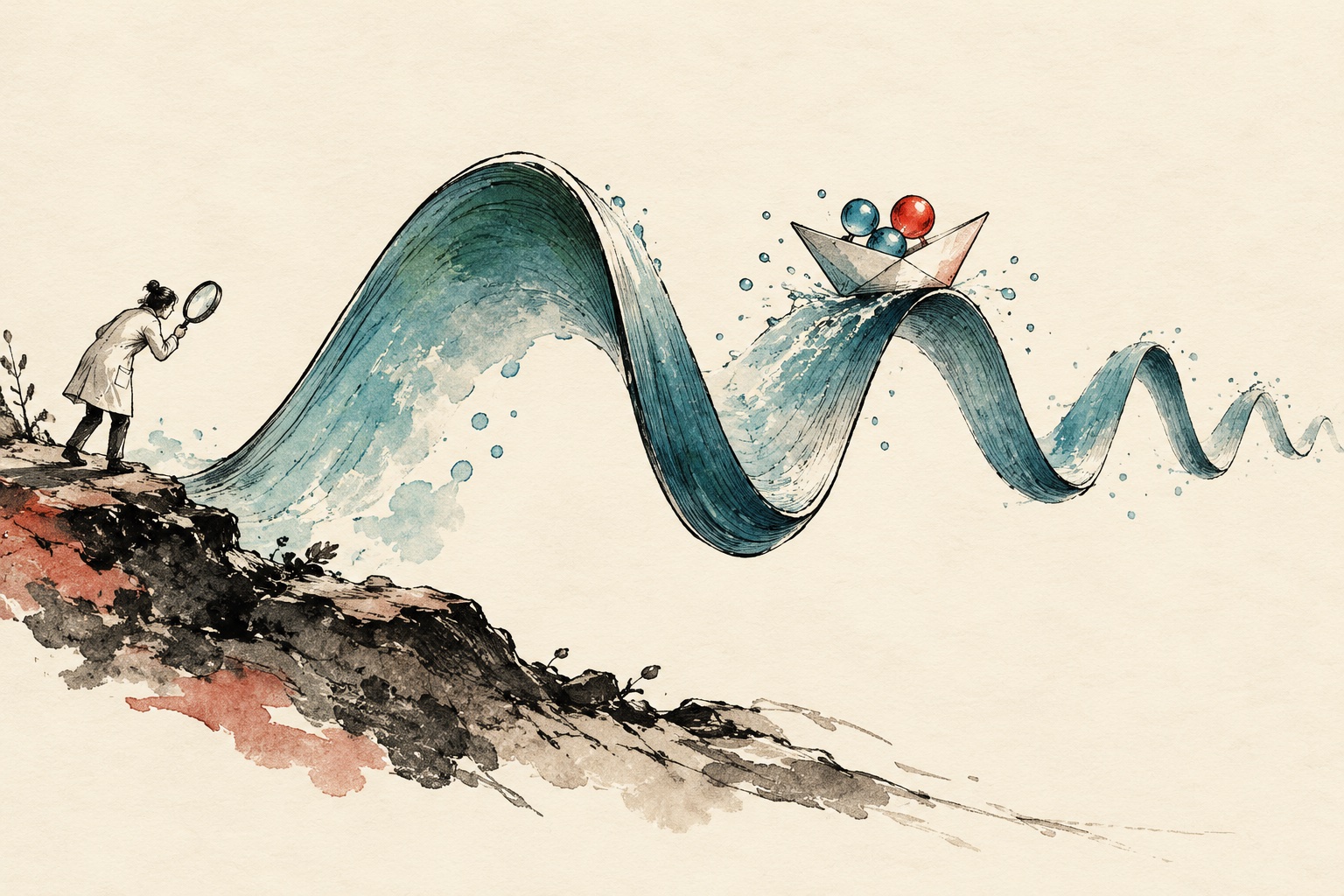
Conceptual illustration of a paper boat carrying droplets along a wave-shaped ribbon, watched by a scientist. This is not a medical diagram.
Original editorial illustration

Medical research

A little sound could carry medicine farther.

An experimental implant helps molecules spread through tissue. Its first tests are encouraging, and early.

Read the story

Getting a treatment into the brain is only part of the problem. It also has to reach the tissue where it is needed. MIT researchers have built an experimental implant called LUCID that combines a delivery channel with a miniature ultrasound array.

In gel-like tissue models, ultrasound helped molecules spread farther. In mice, the team delivered an MRI contrast agent and observed wider distribution when the ultrasound was switched on.

The long-term hope is more controlled local delivery after surgery for aggressive brain tumors. These experiments did not demonstrate that the implant prevents cancer recurrence in patients, and the mouse test used a contrast agent rather than a cancer treatment.

The promising result is a delivery mechanism, with clinical benefits still to be established. A small engineering step can be good news without being a finished cure.

MIT News: LUCID research ↗

Source published October 26, 2026

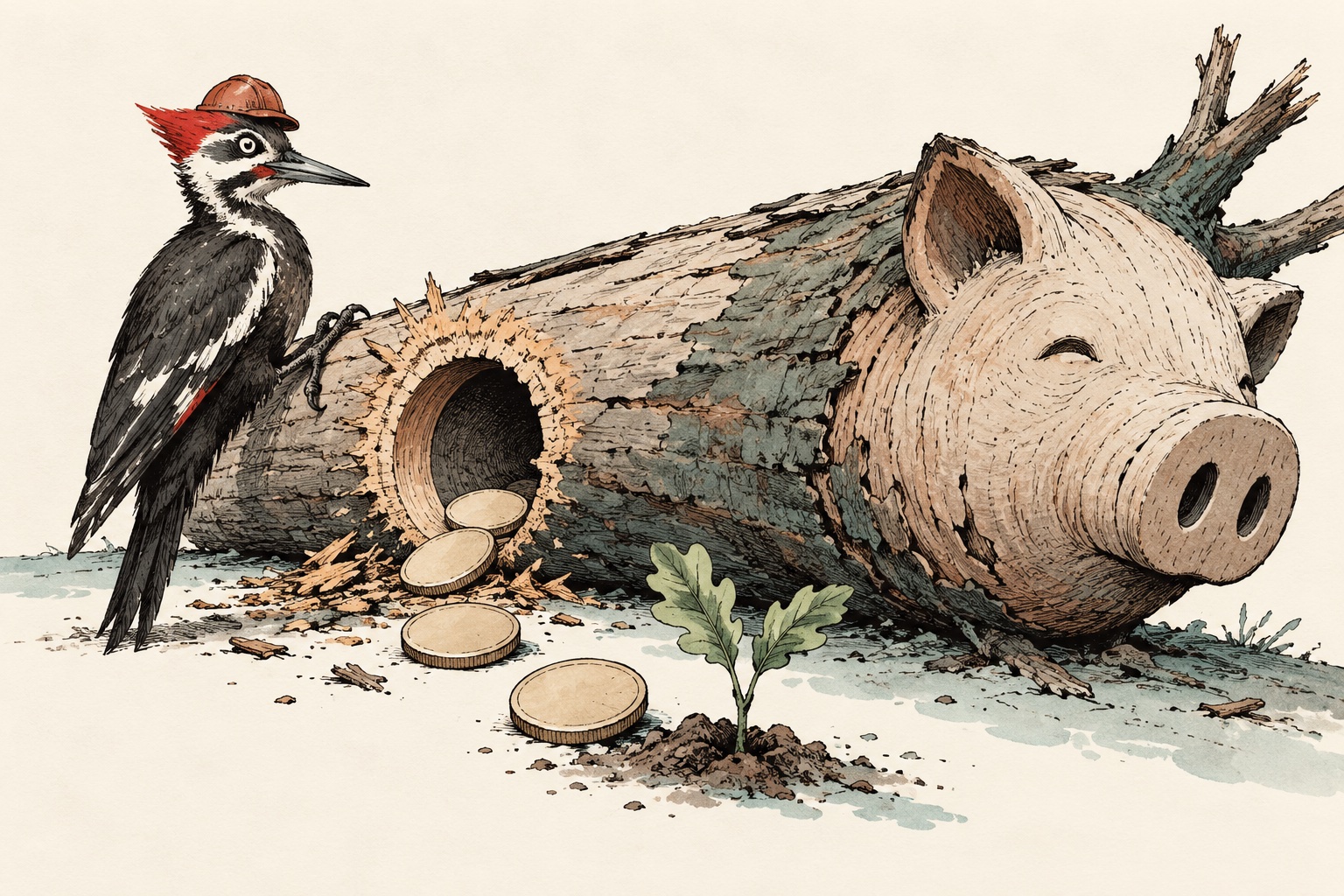
A generic woodpecker opens a tree-shaped piggy bank beside a seedling. Conceptual art about conservation funding, not a depiction of a particular funded species.
Original editorial illustration

Wildlife

A fresh investment in wild neighbors.

New grants put $35.5 million toward the practical work of species recovery.

Read the story

The National Fish and Wildlife Foundation and U.S. Fish and Wildlife Service have announced 109 grants under a new species-recovery program. The awards total $35.5 million, with another $8.6 million in matching contributions.

The projects address specific obstacles: incomplete survey data, habitat problems and the work of helping wildlife coexist with farms, forests and other working landscapes.

Examples include developing environmental-DNA tests to find elusive species, improving pollinator habitat along energy corridors and tracking how fishers respond to forest-management activities.

These are funded plans, not proof that 109 species have recovered. Their value is giving local partners tools and resources to test what works, then measure the results. Recovery often needs exactly that patient, practical work.

National Fish and Wildlife Foundation: grant announcement ↗

Source published October 21, 2026

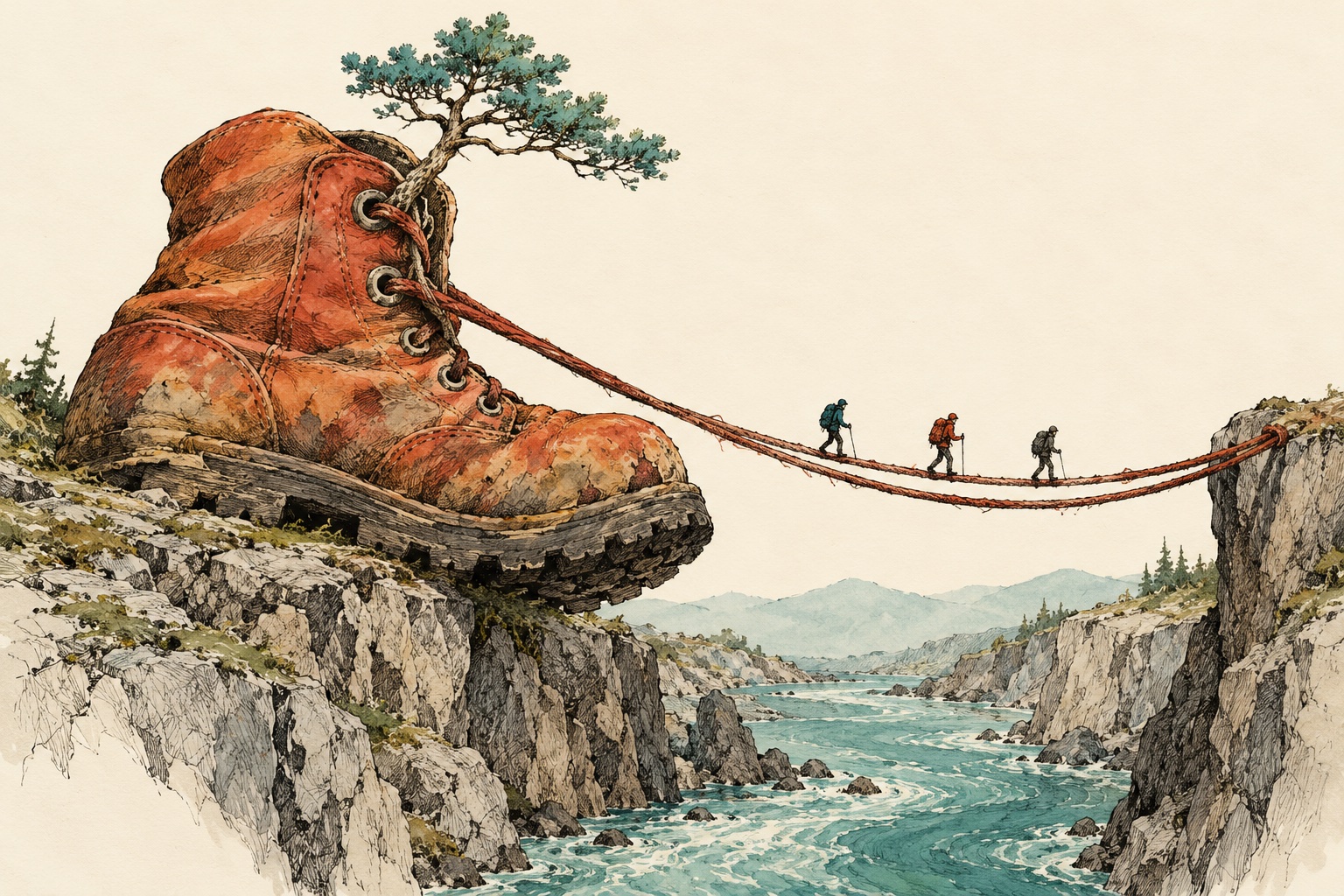
An impossible hiking boot and shoelace bridge span a river, a conceptual metaphor for restored access. It does not depict an actual bridge or campground.
Original editorial illustration

Places & people

The way back is being rebuilt.

Two campgrounds reopen in North Carolina as river and trail repairs continue after Helene.

Read the story

Black Mountain and Briar Bottom campgrounds reopened on September 25, nearly two years after Hurricane Helene. An October 16 Forest Service update describes the repairs and partnerships that brought visitors back to this part of the Pisgah National Forest.

Nearly four miles of South Toe River Road also reopened. Crews removed more than 6,700 tons of material from the damaged campground bridge; some storm debris became biochar used to help rehabilitate local soil.

The recovery is incomplete. The update says the River Loop Trail and Briar Bottom bike trail remain closed. Wildlife teams are planning to raise hellbender eggs through their vulnerable early stage, while watershed assessments will guide further restoration.

This is a record of work completed alongside work still ahead. Reopened campsites, repaired access and volunteers clearing a river are tangible reasons for optimism.

U.S. Forest Service: South Toe recovery update ↗

Source published October 16, 2026

Take something good with you

Small steps count. So do the people taking them.

Know a story that deserves a little daylight? Keep looking close to home.

Create your own newspaper ↗