● TabBOOOne page. More perspective.✎ Customize
Your world, one good read at a time

TabLOID

Tiny machines. Better search. A pair of shoes that became a friendship.

No. 13 · Miami BeachMonday, October 12, 2026Read at your own pace
Instinct AI illustration of a robot printing tiny gears from instructions
Catch up quick
  1. Tiny machines, built from digital designs. The first relay is sampling.
  2. Apple’s living-room plans remain a watch-list item until the announcement.
  3. A smaller AI work forecast needs a more careful headline.
  4. Google puts multimodal search on consumer hardware.
  5. Open software gets another Word challenger. Two small, very human happy endings.

Open what interests you

01HARDWARE DESKCode goes in. Tiny machines come out.The factory is the interesting part.Instinct AI illustration of digital instructions producing tiny machines
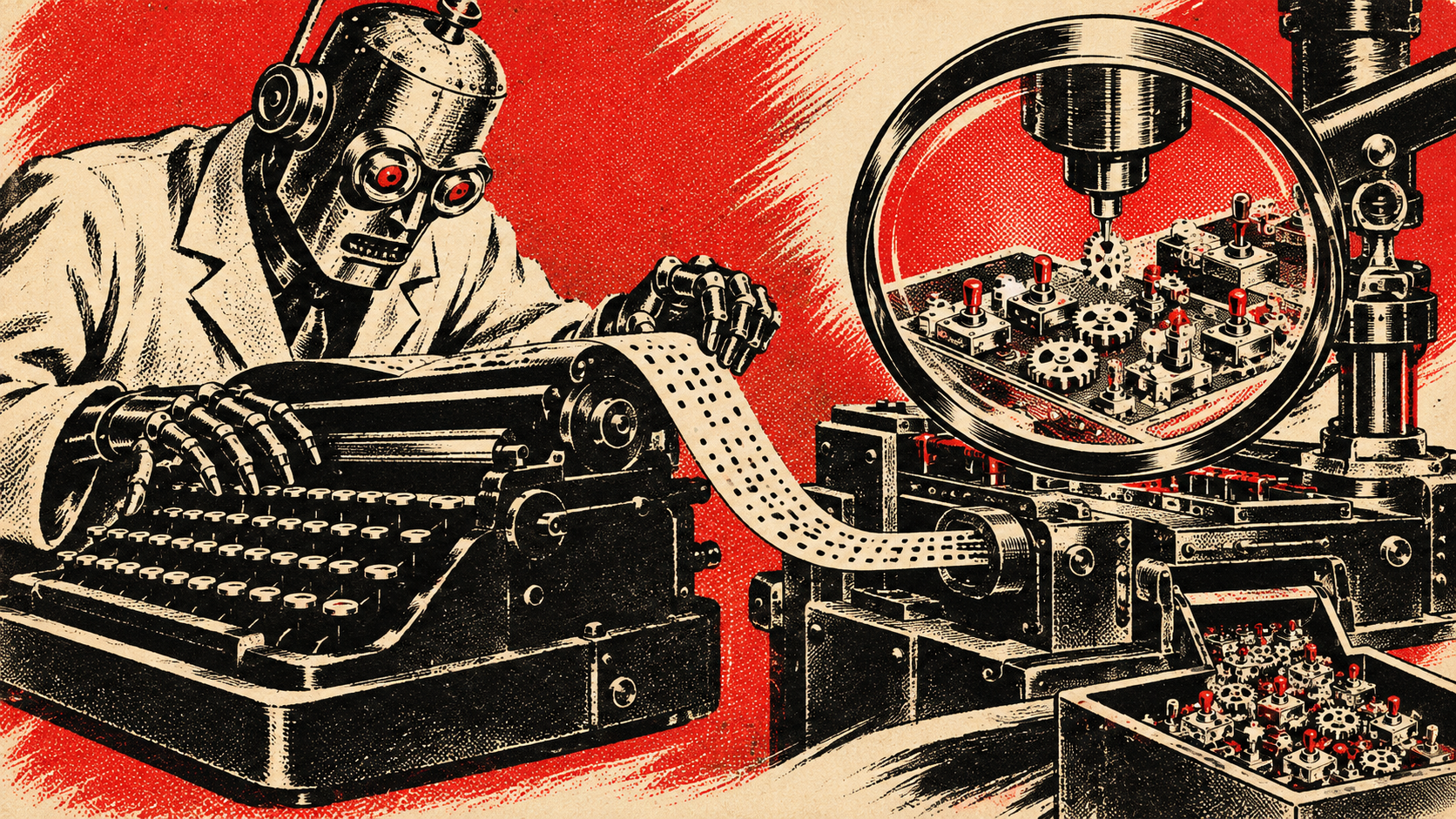
Atomic Machines says its Matter Compiler turns digital designs into working micro-machines. Founder Jeff Holden’s October 7 account describes six years in stealth and a manufacturing system without molds or masks, measuring each operation as it goes.

Its first device, PrimeSwitch, is an electromechanical relay. The company lists a 50-microsecond opening time, a 150-amp continuous-current rating and zero power to hold its state. Its product page says “Sampling Now,” so we are not calling this a broadly available retail product.

These are the manufacturer’s specifications, not our independent lab results. The larger idea is intriguing: change the instructions instead of rebuilding the factory. Hardware iteration could become less like ordering another warehouse and more like editing another file. Still, atoms do not accept an apology when the test fails.

Founder’s original account · PrimeSwitch specifications and availability · Matter Compiler

02GADGET DESKApple’s living room is on the watch list.The invitation is not a product specification.Conceptual Instinct AI illustration of a futuristic living room

Reporting on Apple’s “Welcome Home” invitation points to an October 13 event. A smart home hub, updated HomePod Mini and Apple TV are among the expectations circulating ahead of it.

We are leaving the rumored chip, colors, product names and November shipping date out of the factual headline. None is an announced product specification in the primary material we verified for this edition.

The useful question: will another screen make the home easier to run? Tomorrow’s announcement will be more useful than today’s wish list. The toaster does not need a keynote.

Event reporting and expectations · Instinct’s supplied report

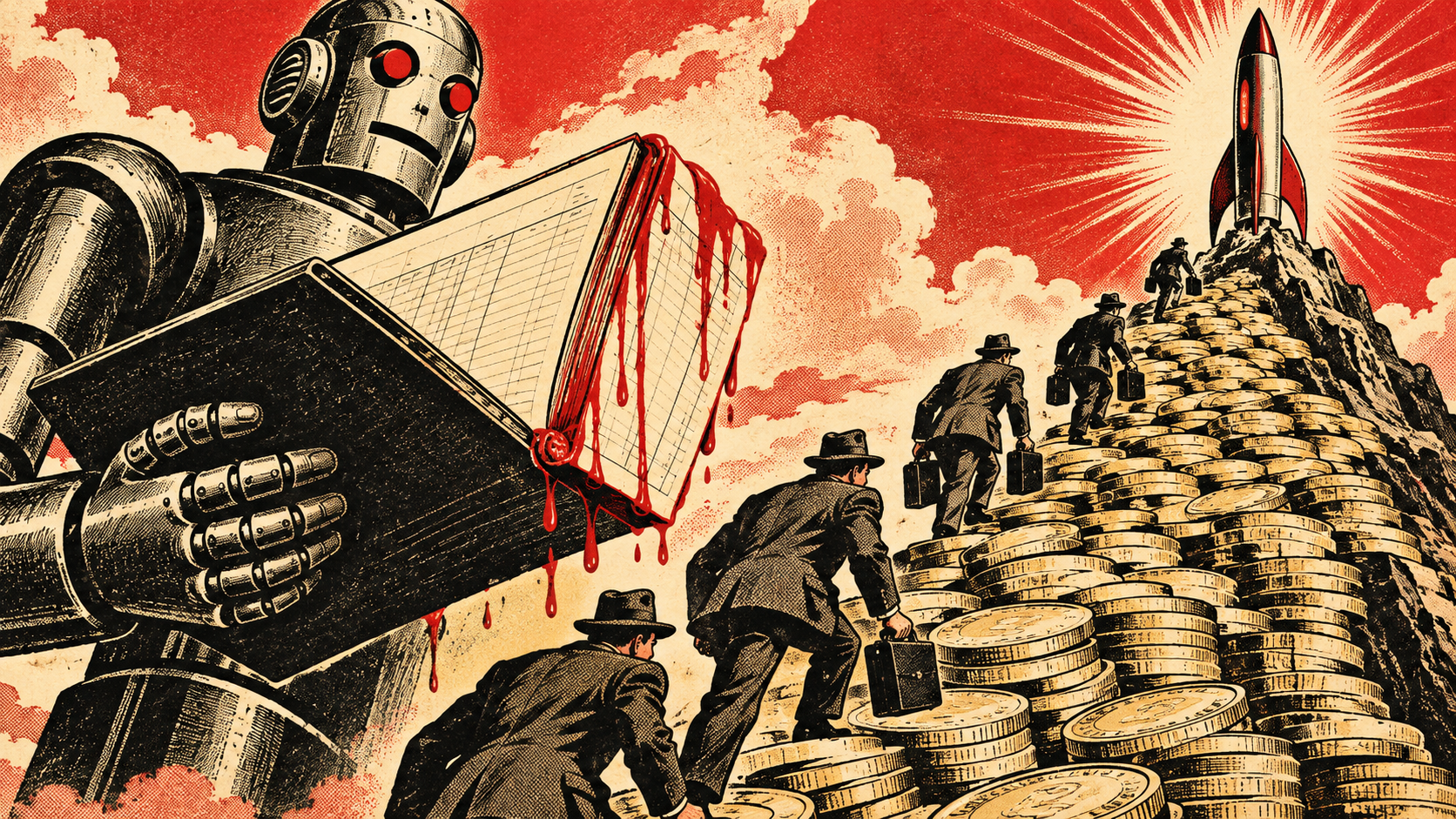
03WORK DESKFive percent is an estimate, not your redundancy notice.Tasks, economic activity and jobs are different measures.Conceptual Instinct robot and ledger illustration for economic forecasts

MIT’s account of economist Daron Acemoglu’s research offers a restrained view of AI’s near-term economic effects. It identifies work such as summarizing data, visual matching and pattern recognition as a bounded part of the economy, roughly 5 percent in his discussion.

That does not establish that exactly 5 percent of people will lose their jobs, or that every affected task means a whole occupation disappears. His decade-scale estimates depend on assumptions about what AI can do and what firms actually adopt. The MIT article is from December 2024, not a newly conducted October 2026 study.

For a builder, the better question is which specific task you can improve. A tool that saves a worker an hour is easier to evaluate than a grand declaration that work is over. Especially if the declaration still needs someone to make the slides.

MIT’s explanation of the research · Acemoglu’s paper

04SEARCH DESKYour phone can search more than words.A small model for finding the thing you remember.Conceptual retro robot illustration for local search tools

Google released EmbeddingGemma 2 on October 6. Its 740-million-parameter model maps text, images, audio and video into a shared representation for retrieval. Google says it is available under Apache 2.0 and designed for consumer hardware.

The practical promise is searching a media library with a description, finding a video moment, or connecting a voice memo to relevant material. Google reports about 191 MB of active RAM for quantized text-only weights and 567 MB for the full multimodal model on a Pixel 11 Pro. Those figures are Google’s measurements on that device, not a guarantee for every phone.

It is an embedding model, not a whole search engine. You still need data, an index and a useful interface. A better filing cabinet is a win. It does not magically fill itself with the internet.

Google’s launch and measurements

05BUILDER DESKWord has an open-source challenger to inspect.Try a copy of the document first.Conceptual Instinct illustration for creating software

WordCraft’s maintainers describe a Rust word processor with document styles, tables and review tools, plus .docx reading and writing. The public repository identifies MIT and Apache-2.0 licensing.

That makes it interesting to writers and developers who want software they can inspect. It does not establish perfect compatibility with Microsoft Word, and we have not run a document round-trip test. Treat its README as a statement of intended capabilities.

This is a follow-up to the software story in yesterday’s paper, with the actual code as the useful link. Keep a backup before experimenting with your manuscript. Your novel already has enough plot twists.

WordCraft repository and README

Today's good news

He gave away his shoes. He gained a friend.

TODAY’s October 12 report tells how Jordan Hope, 18, stopped outside a Walgreens in Maricopa, Arizona, and gave his slides to an older man whose footwear was worn. Hope returned, helped arrange a ride home and exchanged phone numbers with the man, identified only as Mr. Roy. The two now call daily. A bystander filmed part of the encounter, but Hope had not been performing for her camera. A small act of care became something that lasted after the video.

Read the source ↗
More good news

Fifty-six corals got a lift home.

NOAA’s September 29 account describes 56 laboratory-cared-for corals returned in August to seafloor sites near Flower Garden Banks National Marine Sanctuary. A specially built coral elevator lowered them, and a remotely operated vehicle placed them near their original collection sites. At one site revisited from the 2025 effort, all previously outplanted corals had survived and grown. This is a specific restoration milestone, not a claim that the whole reef has recovered. New to today’s paper, with the actual event dates kept clear. Sometimes progress looks like patiently putting small living things back where they belong.

Read the source ↗
Close ×Enlarged comic