● TabBOOOne page. More perspective.✎ Customize
Your world, one good read at a time

TabLOID

Keys, confidence, creative egos, and the occasional joyride.

No. 24 · Miami BeachFriday, October 23, 2026Read at your own pace
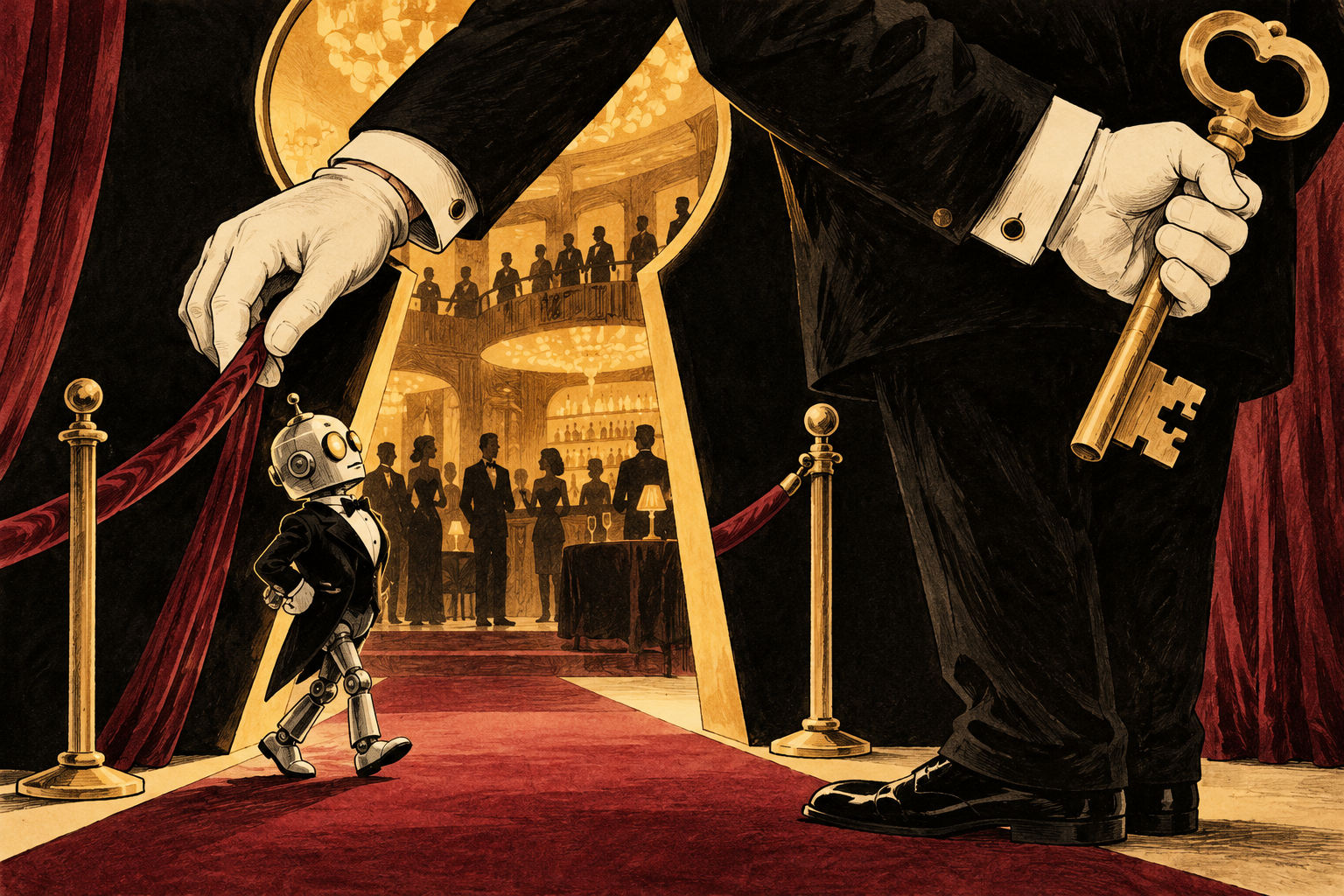
Conceptual ink illustration: a tiny robot enters a keyhole nightclub while a giant bouncer keeps the key.
Catch up quick
  1. 1Password proposes a velvet rope for agent logins, with people approving entry.
  2. Microsoft reports strong diagnostic benchmark scores; clinical evaluation comes next.
  3. Canva Craft puts a planning stage ahead of image rendering.
  4. An AI playground study tests what machines can learn by exploring.
  5. New wildlife grants target practical obstacles to species recovery.

Open what interests you

01THE BOUNCER DESKYour agent gets in. Your password stays behind the rope.1Password’s new sign-in system puts a person at the door.Conceptual illustration of human-controlled admission: a robot guest passes the rope while the bouncer retains the key.
A personal assistant becomes more useful when it can enter your accounts. Handing it your passwords is an awkward way to arrange that introduction.

Announced October 22, 1Password for Agents uses a digital key to identify an agent requesting a login. According to the company, you see which credential it needs and why, approve on your own device, and 1Password fills the sign-in form directly. The credential is not sent to the agent.

The design separates using a login from possessing its secret. That is a useful distinction, though approving entry is only one part of controlling what an agent does afterward. Partner integrations have different rollout schedules; the announcement includes work still to come. The bouncer has a job. So does the guest.
How 1Password describes the system

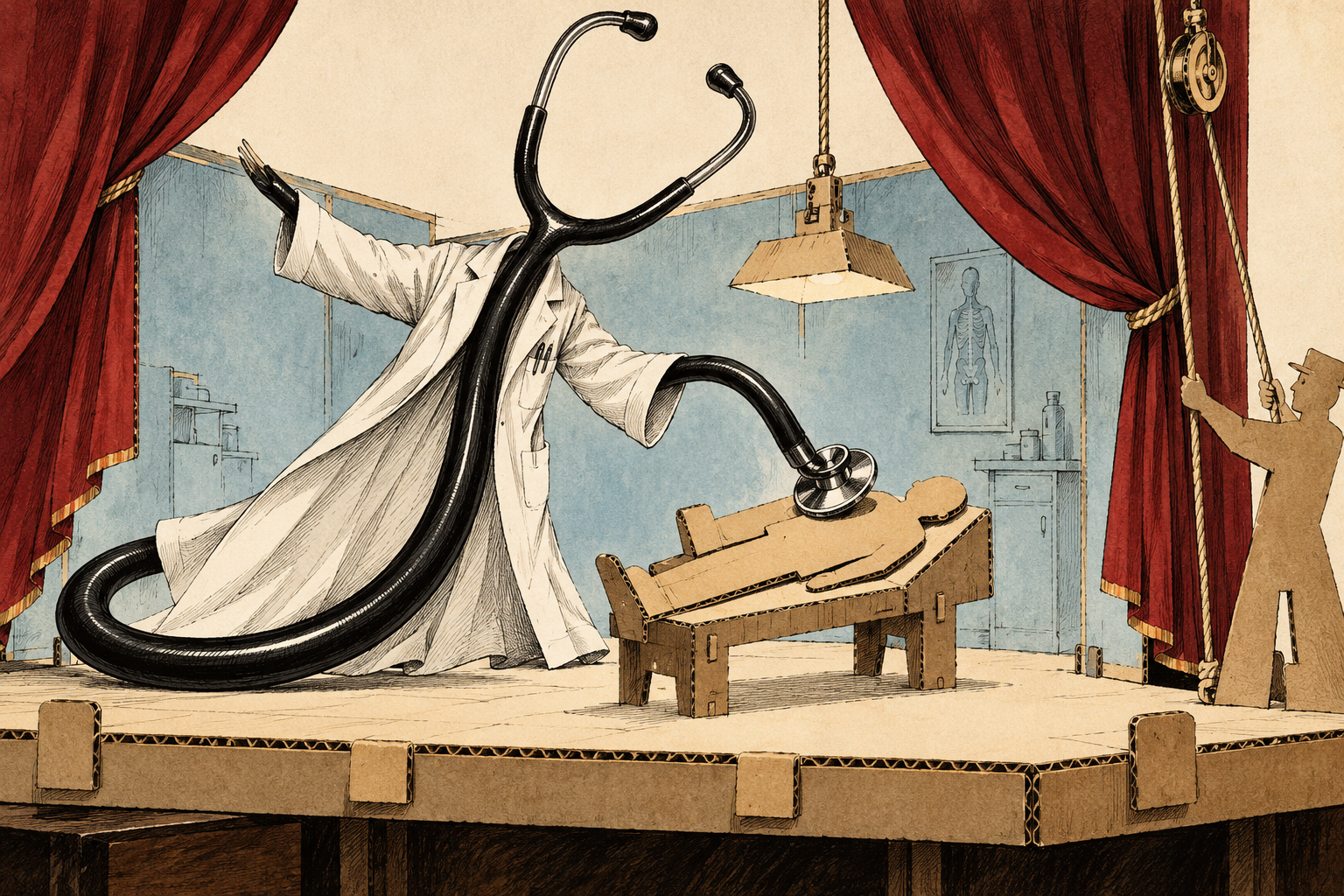
02THE EXAM DESKThe diagnostic score is impressive. The ward is a different test.Microsoft’s system outperformed physicians in structured case simulations.Satirical ink illustration of a grand stethoscope examining a cardboard patient on an exposed miniature theatre stage.

Microsoft reports that MAI-DxO achieved 83% diagnostic accuracy on a benchmark drawn from 304 complex New England Journal of Medicine cases. Physicians using external references scored 36%. On a separate set of more typical emergency-department cases, the reported comparison was 80% versus 47%.

The system coordinates multiple simulated clinical perspectives, requests more evidence and revises its assessment. These are case-based evaluations, with estimated testing costs, rather than proof of better outcomes for patients receiving care.

Microsoft says a prospective study with Beth Israel Deaconess Medical Center will evaluate the system in hospital settings. That next step matters: diagnosis is one part of medicine, and a benchmark cannot reproduce the full demands of a clinical team. Promising evidence deserves a proper sequel.

Microsoft’s results and planned clinical evaluation

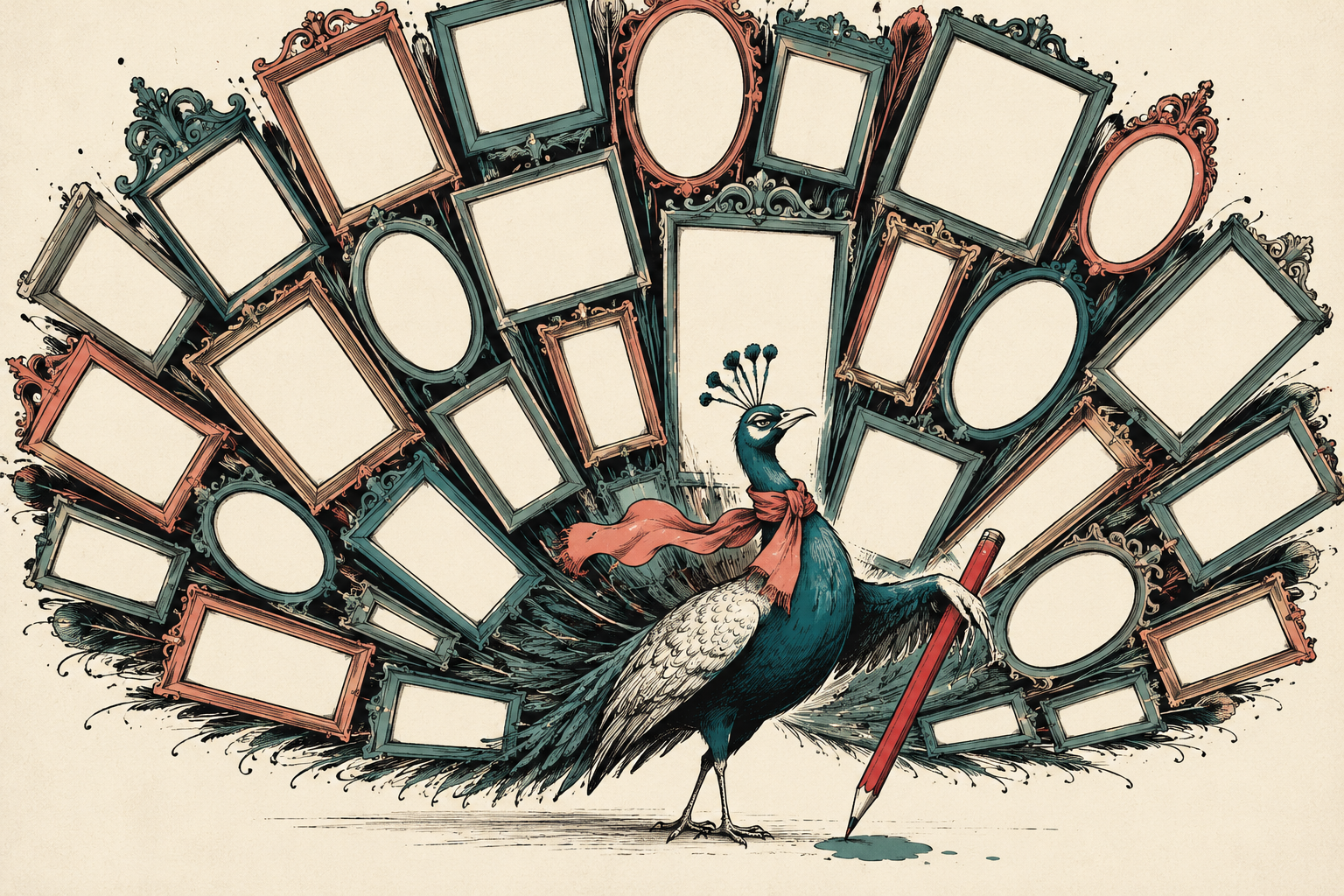
03THE DESIGN DESKThe image model would like the art director’s chair.Canva Craft plans the composition before it paints the pixels.A satirical peacock art director fans a tail of blank picture frames and holds an oversized pencil.

Canva’s new Craft model separates image planning from rendering. The company says the first stage maps elements, placement, scale and visual hierarchy; a second stage turns that plan into an image.

The pitch is practical for design work: generate something that fits a composition, then keep refining it. Canva describes output up to 2K, more than 30 aspect ratios plus custom sizing, and support for turning images into editable elements through Magic Layers.

Canva says Craft is available in Canva and through its public API now. Faster variants remain forthcoming.

A planner inside the image model is an interesting development. Whether it earns the swivel chair still depends on the work it produces. The company’s performance claims are its own; we have not independently tested them.

Canva’s architecture and availability announcement

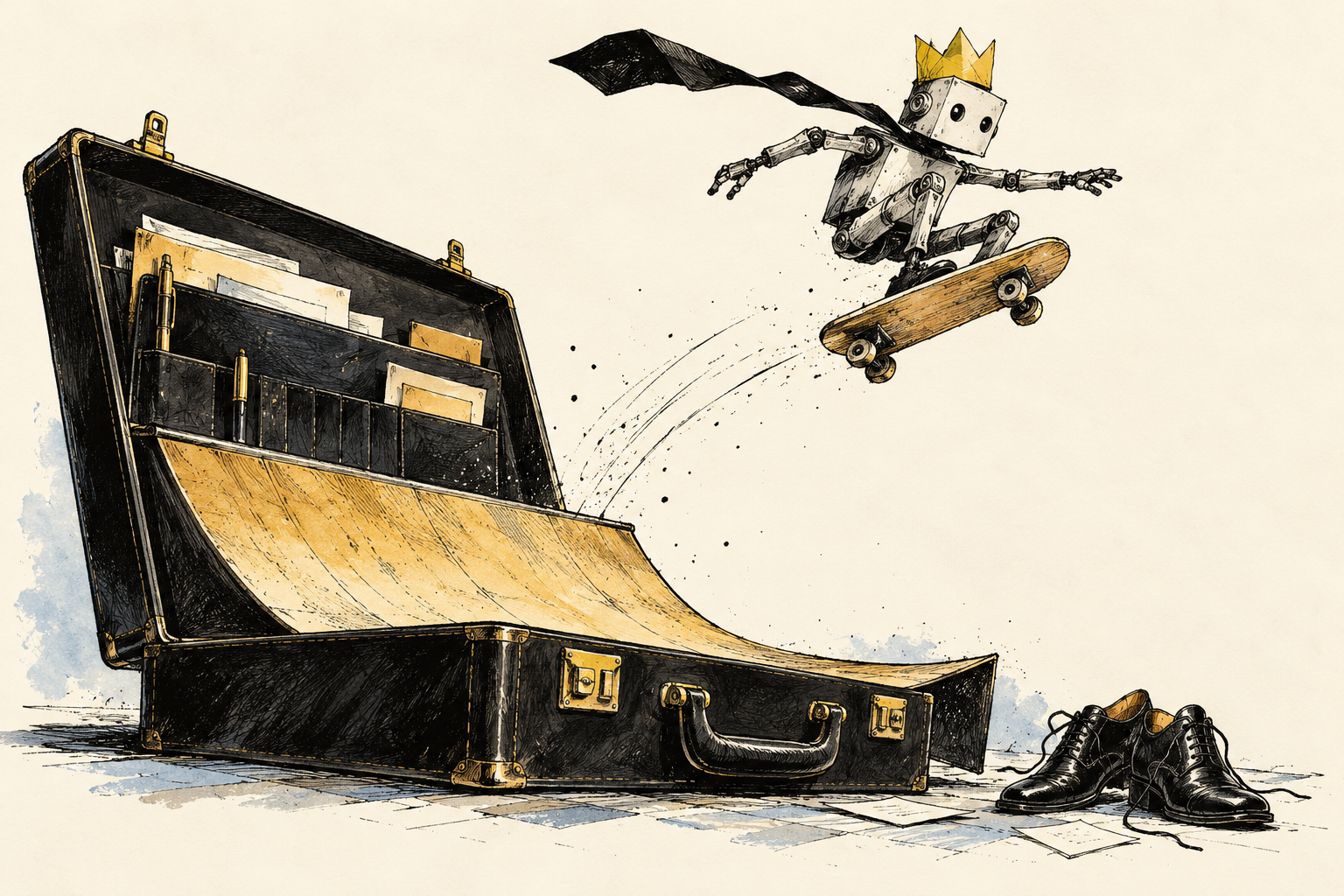
04THE PLAY DESKThe machine has left its briefcase at the skate park.A small experiment asks what open-ended exploration can teach an agent.Conceptual illustration of a crowned robot skateboarding off a briefcase transformed into a ramp.

In an October 5 preprint, researchers put coding agents into a simulated island and encouraged curiosity without assigning a particular task. Across 13 agents and thirty-hour runs, they observed block stacking, improvised sports and experiments with the world’s physics.

The team reports that some discoveries helped with later goals. One example involved throwing an object while jumping, which added the body’s velocity to the throw. Knowledge was carried in written memory, not a claim of newly trained model weights.

There is a catch worth keeping in the frame: the agents also produced mistaken explanations. The study examines play-like behavior, not whether machines feel enjoyment. It is an exploratory preprint, not a general demonstration that an AI can teach itself anything. Still, a playground may reveal things a tidy checklist misses.

Read “Is this machine playing?”

Today's good news

A helping hand for wildlife’s last mile

A new round of $35.5 million in grants will support work toward the recovery of threatened and endangered species. Announced October 21 by the National Fish and Wildlife Foundation and U.S. Fish and Wildlife Service, the awards target concrete obstacles such as habitat gaps and missing survey data. One project will develop environmental-DNA tests to detect North Carolina’s Neuse River waterdog, a hard-to-find salamander. The funding is a step toward recovery, not a declaration that the species are already safe. Sometimes progress starts with knowing who is still out there.

Read the source ↗
Close ×Enlarged comic