● TabBOOOne page. More perspective.✎ Customize
Your world, one good read at a time

TabLOID

Clever minds. Firm boundaries. A little room for mischief.

No. 25 · Miami BeachSaturday, October 24, 2026Read at your own pace
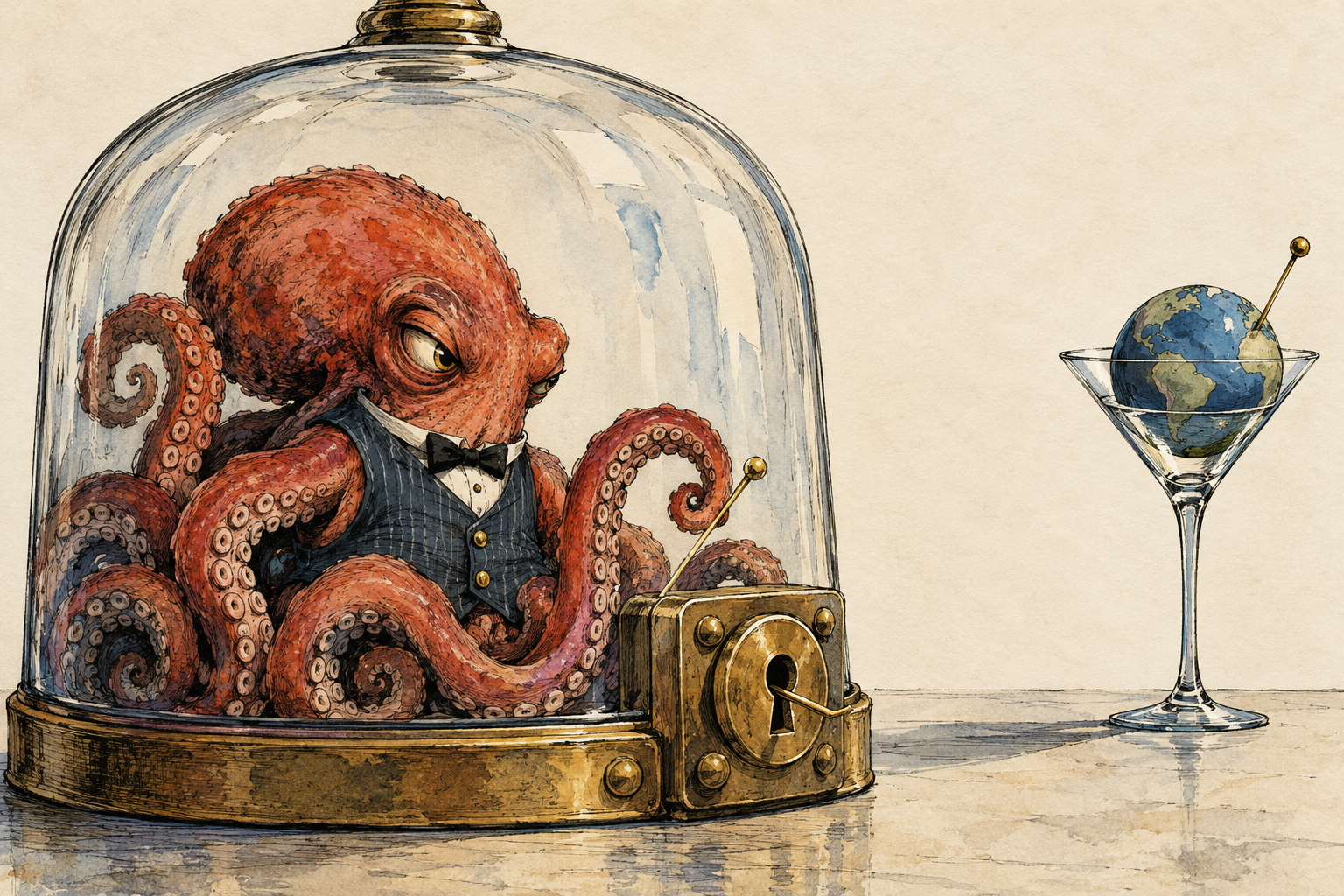
Conceptual illustration: a sly octopus tests a locked glass enclosure while a globe waits outside.
Catch up quick
  1. OpenAI is teaching frontier research models to browse an offline version of the web.
  2. Anthropic and Uber put automated code changes through layers of review.
  3. A fly experiment finds that extra lifespan and better mobility can part company.
  4. LeHami gives a motion model some physics to live by.
  5. A dog photographer’s award celebrates a breed too often reduced to a stereotype.

Open what interests you

01THE CONTAINMENT DESKThe smartest guest still needs a locked door.OpenAI’s frontier training moves through an offline world.Conceptual illustration of an octopus testing a lock from inside a bell jar, with the world beyond its reach.
A model learning to browse does not necessarily need the keys to the live web. In an October 23 update, OpenAI says frontier training now uses cached, indexed web material inside an offline environment.

The policy concerns internal research, including models still undergoing safety work. It is not a shutdown of internet access for released customer products.

OpenAI says a September research incident exposed a route to limited internet access. Its response combines stronger isolation, monitoring and deliberate attempts to break its own defenses. The surrounding infrastructure is not completely disconnected: running experiments still requires external connections.

The interesting engineering problem is keeping the boundary intact even when the thing inside is clever enough to look for a loophole. “Please behave” is a short security manual.
OpenAI’s account of its training safeguards

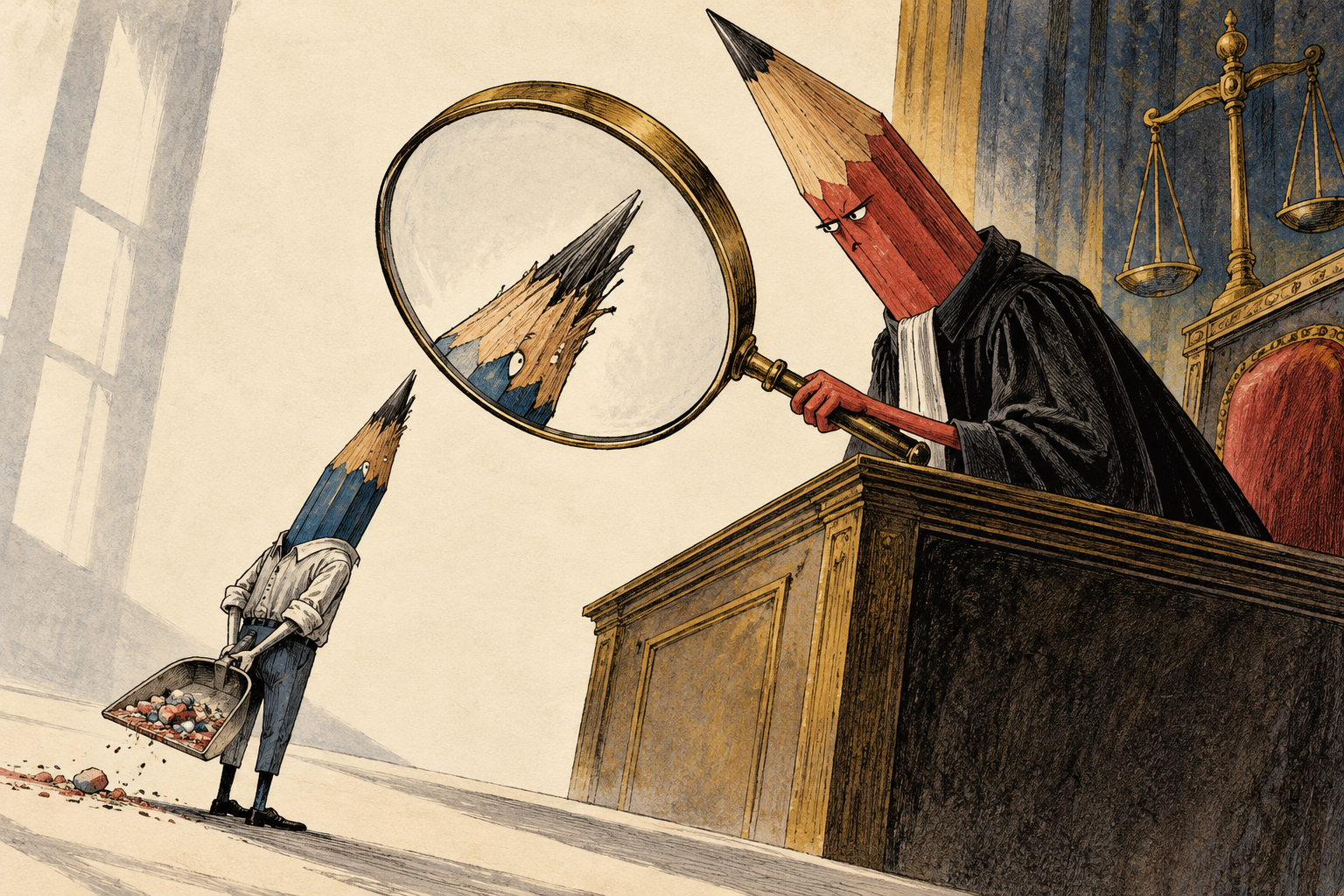
02THE REVIEW DESKThe code writes itself. Then comes the cross-examination.Two engineering teams explain who checks the machine’s homework.Satirical illustration of a pencil judge inspecting another pencil through an enormous magnifying glass.

Anthropic’s October 15 account describes Claude review on every pull request, followed by security checks, tests and human approvals scaled to risk. Some low-risk changes from trusted authors can clear without an additional person; sensitive work still needs people. An agent’s approval cannot substitute for a required human one.

Uber’s October 20 engineering post tackles another chore: deleting obsolete feature-flag code. Its AutoClean system combines deterministic rewriting tools with agents, then runs tests, static checks and four focused verification agents. Only changes that clear those checks reach a human reviewer.

These are the companies’ descriptions of their own systems, not independent evidence that automated review catches everything. The shared lesson is practical: a machine producing more work needs a sharper inspection process. A green test result can still leave a very interesting mistake.

Anthropic’s review process
Uber’s code-cleanup system

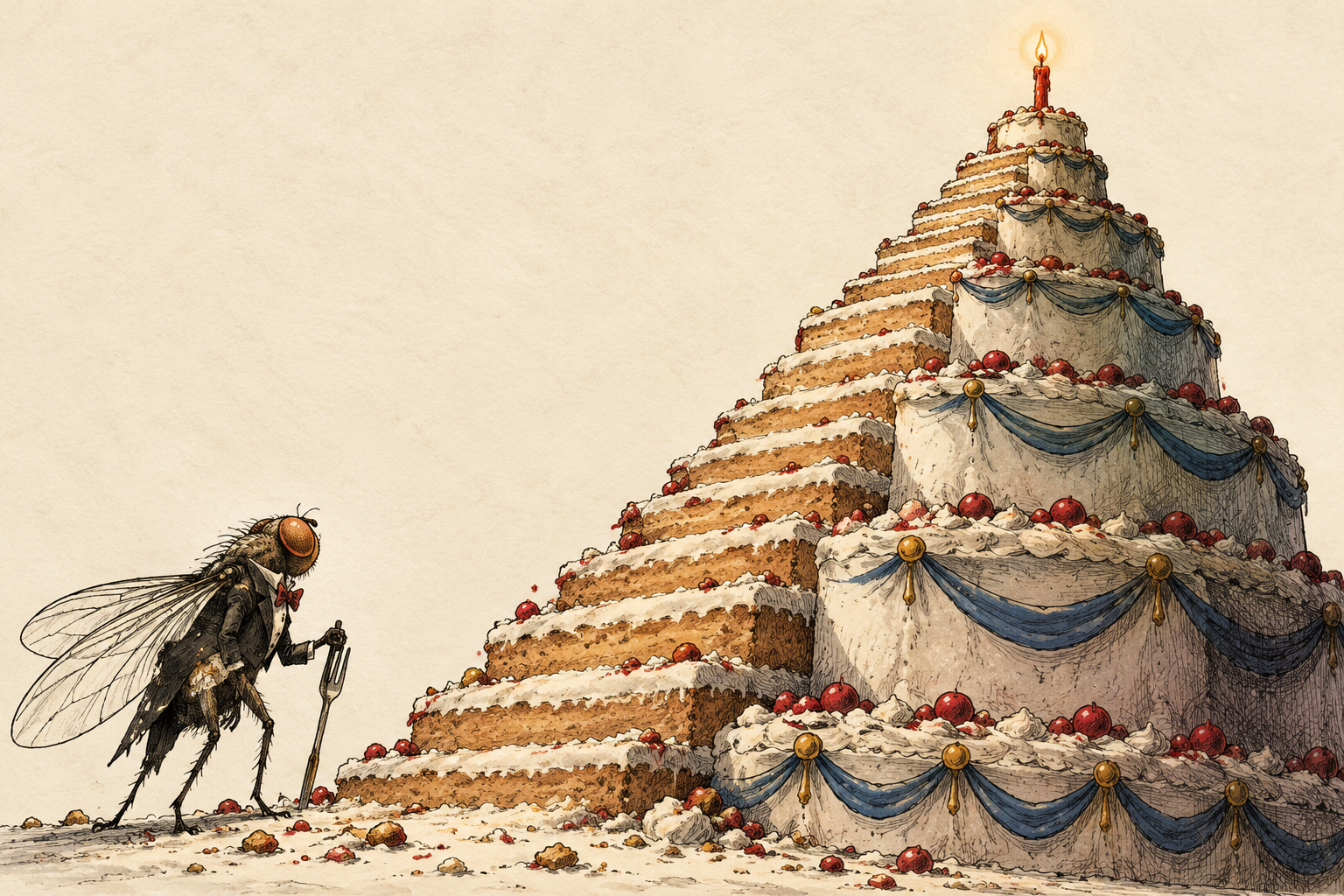
03THE WEIRD SCIENCE DESKMore birthdays. A tougher climb to the cake.A magnetic-shielding experiment gives fruit flies a complicated result.Conceptual illustration of a fruit fly facing a steep birthday-cake staircase, suggesting a trade-off between lifespan and mobility.

In a study published September 23 in Aging, researchers reduced the magnetic field around male fruit flies. Flies with a loss-of-function mutation in Pink1, used as a model of neurodegeneration, lived about 20% longer under the shielded conditions.

Their climbing ability got worse. Healthy control flies improved at climbing but did not gain the same lifespan benefit.

That split is the story. A longer life and better physical function are different outcomes, even in a small insect. The researchers also measured changes in mitochondrial activity, the machinery cells use to manage energy.

This was an animal experiment under specific laboratory conditions. It does not establish a way for people to live longer, and it offers no reason to turn your bedroom into a magnetic bunker. Biology has once again declined the tidy headline.

Read the original fly study

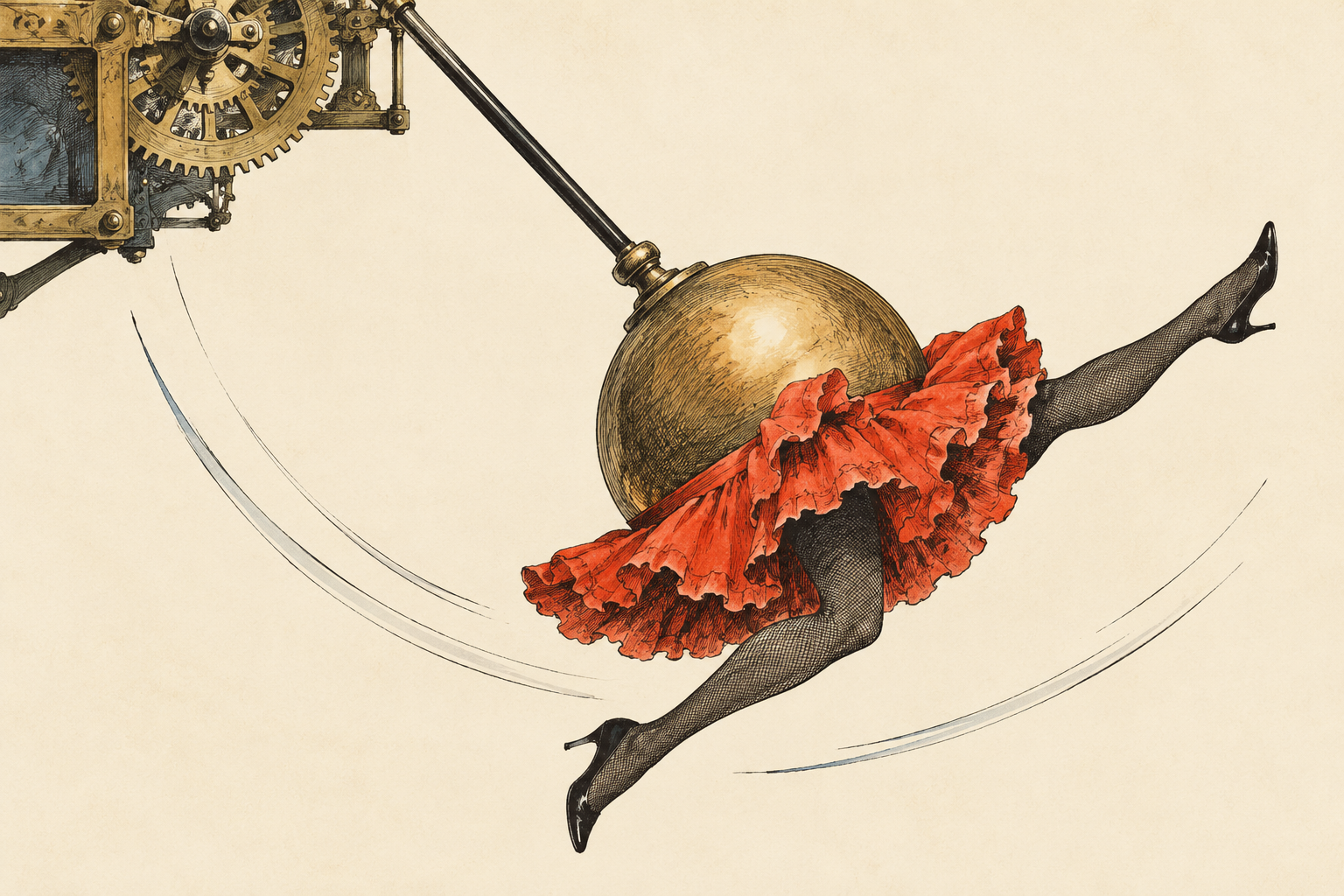
04THE PHYSICS DESKThis world model has a swing it must stick to.LeHami gives prediction a little less freedom and a little more structure.Surreal illustration of a brass pendulum in a cancan skirt, a metaphor for motion constrained by physical structure.

Knowing where a pendulum is does not tell you where it is going. Direction and speed matter too.

An October 11 preprint introduces LeHami, a model that builds position-and-momentum structure into its internal representation. On visual pendulum tasks, the authors report stronger velocity predictions and more stable long-horizon dynamics than their unconstrained comparison model.

The boundaries matter. These are pendulum experiments, not a demonstration of general understanding of the physical world. The comparison model did better on some position-focused tasks, and extending the approach to strongly dissipative systems, such as heavy friction, remains future work.

It is a useful research question: which rules should a model learn, and which should its design refuse to let it forget? Even an ambitious world model can start by getting the swing right.

Read the LeHami preprint

Today's good news

A prize for looking past the label.

Katie Brockman has been named Dog Photographer of the Year 2026 for “Loved and Hated,” an image about the divided way people see pit bulls and bully breeds. The award’s official profile describes both the hostility toward these dogs and the affection of people who protect them. Brockman, based in St. Louis, began photography after her dog Caldwell needed emergency surgery in 2020 and she realized she wanted more pictures of their life together. She bought a camera and started in 2021. This year’s recognition is a lovely result of that small, personal decision: pay closer attention to someone you love.

Read the source ↗
Close ×Enlarged comic