● TabBOOOne page. More perspective.✎ Customize
Your world, one good read at a time

TabLOID

Big filings. Smaller bills. Pictures with layers. Machines with ears.

No. 27 · Miami BeachMonday, October 26, 2026Read at your own pace
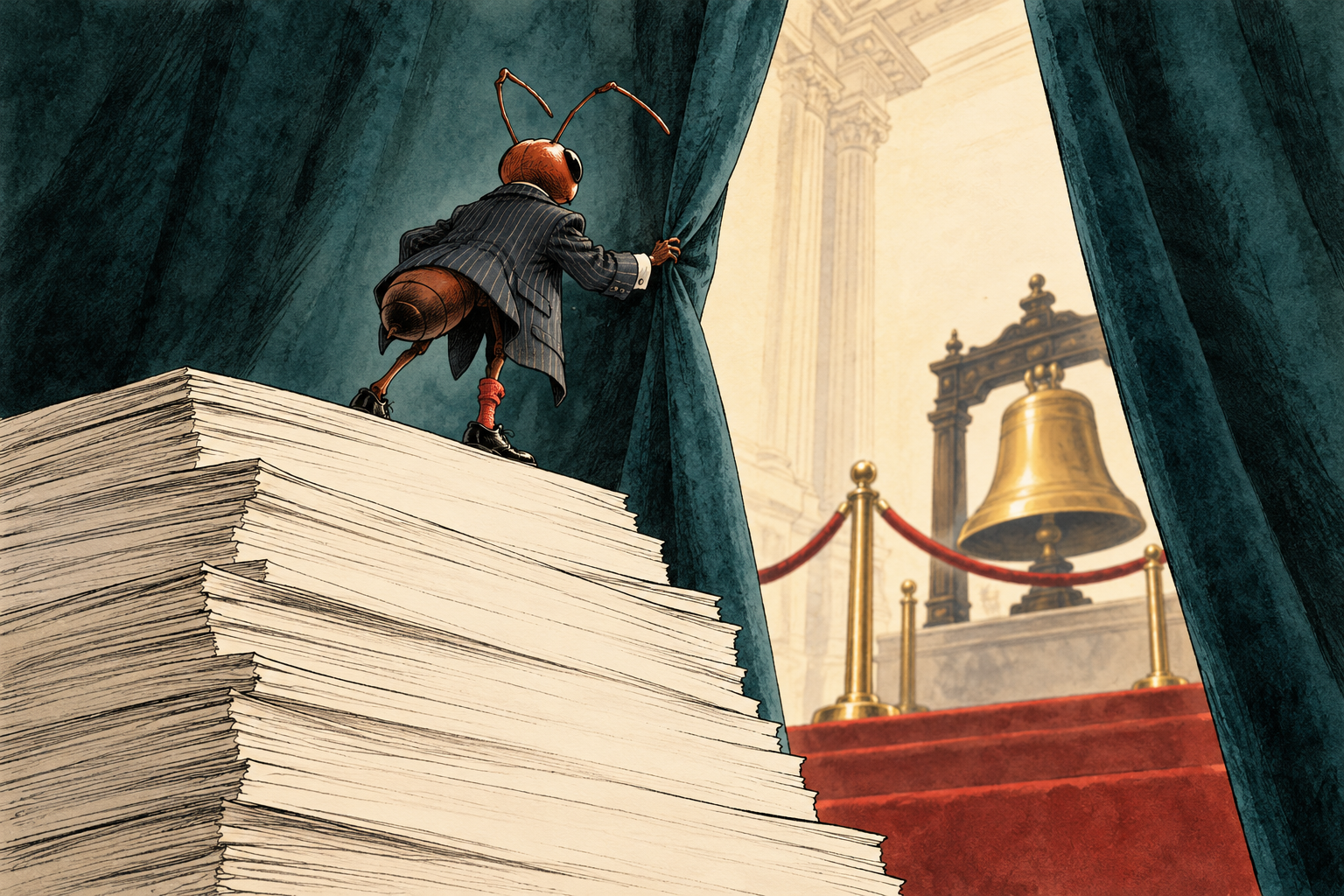
Conceptual satire: an ant in a financier’s jacket peeks toward a silent exchange bell from a stack of papers. The proposed offering has not happened.
Catch up quick
  1. Anthropic files for a proposed Nasdaq listing. Its first-half accounts show rapid revenue growth and an operating loss.
  2. GPT-6.1 Terra lowers the standard API bill for computer-use AI.
  3. Canva Craft’s public API is available; its MCP connection is still coming.
  4. Block’s Dessa learns conversation from speech. Public demos remain research evidence, not an independent test.

Open what interests you

01THE BUSINESS OF AIThe ANT approaches the bell.Anthropic’s IPO paperwork is public. The offering itself is still pending.A dressed-up ant approaches a cordoned-off bell, a metaphor for a proposed stock-market listing.
Anthropic filed its S-1 on October 26 and intends to list on Nasdaq as ANT. Its announcement leaves the offering price and share count undecided; the registration has not yet become effective.

The filing reports $16.3 billion in revenue for the first half of 2026, up 1,300% from a year earlier, alongside a $693 million operating loss. Its much larger $80.7 billion net loss includes $72.4 billion in fair-value changes to convertible notes, derivative liabilities and SAFEs. Those accounting categories should not be confused with operating spending.

Fast growth is the headline. The filing also warns that comparable growth rates may not continue.
Anthropic’s announcement, October 26 · SEC registration statement
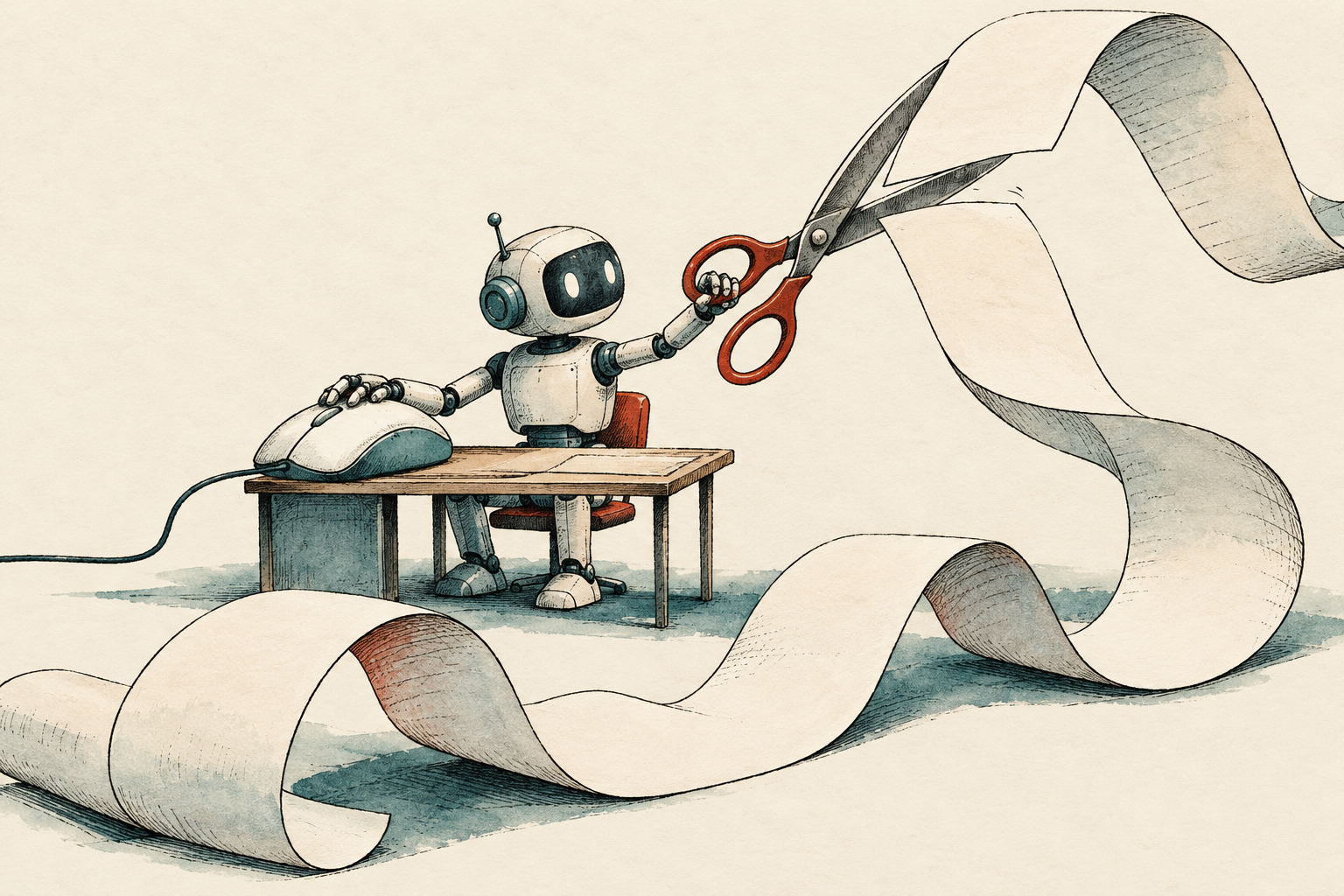
02TOOLS & WORKThe robot’s invoice gets a haircut.OpenAI introduces a cheaper model for computer use, visual reasoning and writing.A robot clerk cuts a blank receipt with giant scissors, a conceptual metaphor for lower API prices.

GPT-6.1 Terra is available in ChatGPT, Work, Codex and the API. OpenAI lists standard API prices of $1 per million input tokens and $5 per million output tokens, with cached input at $0.05 per million.

The company says standard API pricing is 50% lower than GPT-5.6 Terra and GPT-6.1 Sol. Its own evaluations report improved performance on computer-use tasks. Those are vendor results, not a promise that an agent will finish your particular workflow correctly.

For builders, the useful experiment is a familiar one: give the model a representative job, inspect the result, and count the whole bill, including retries. A cheaper token becomes useful when it helps produce reliable work.
OpenAI’s model announcement and pricing, checked October 26

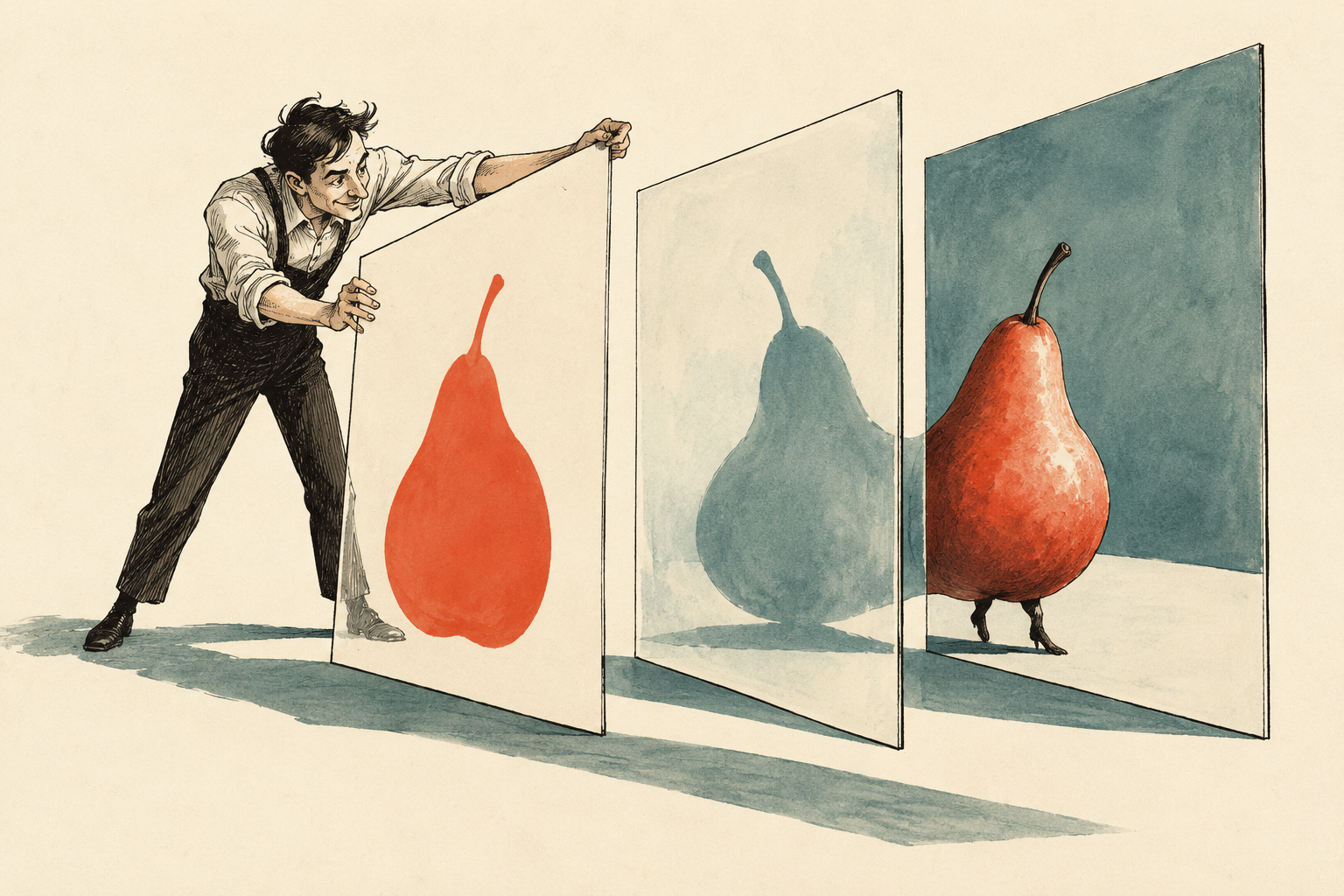
03DESIGN & MAKINGThe picture comes apart. That’s the point.Canva Craft brings composition planning and editable layers into image generation.A stage designer separates a walking pear into floating picture layers, a playful metaphor for editable generated images.

Canva describes Craft as its first image foundation model trained in-house from scratch. Its process plans a composition before rendering it, with output up to 2K and more than 30 aspect ratios.

The practical pitch is what happens after generation: Magic Layers can separate an image into editable elements. Designers can keep working on the result rather than treating every picture as a sealed box.

Craft is available in Canva and through a public API. Canva labels its MCP connection as coming soon. That distinction matters if you are planning an integration today.

Canva’s performance comparisons are company claims. The more useful test is whether the model can follow your layout, preserve the details that matter and leave you something worth editing.
Canva’s Craft announcement, checked October 26

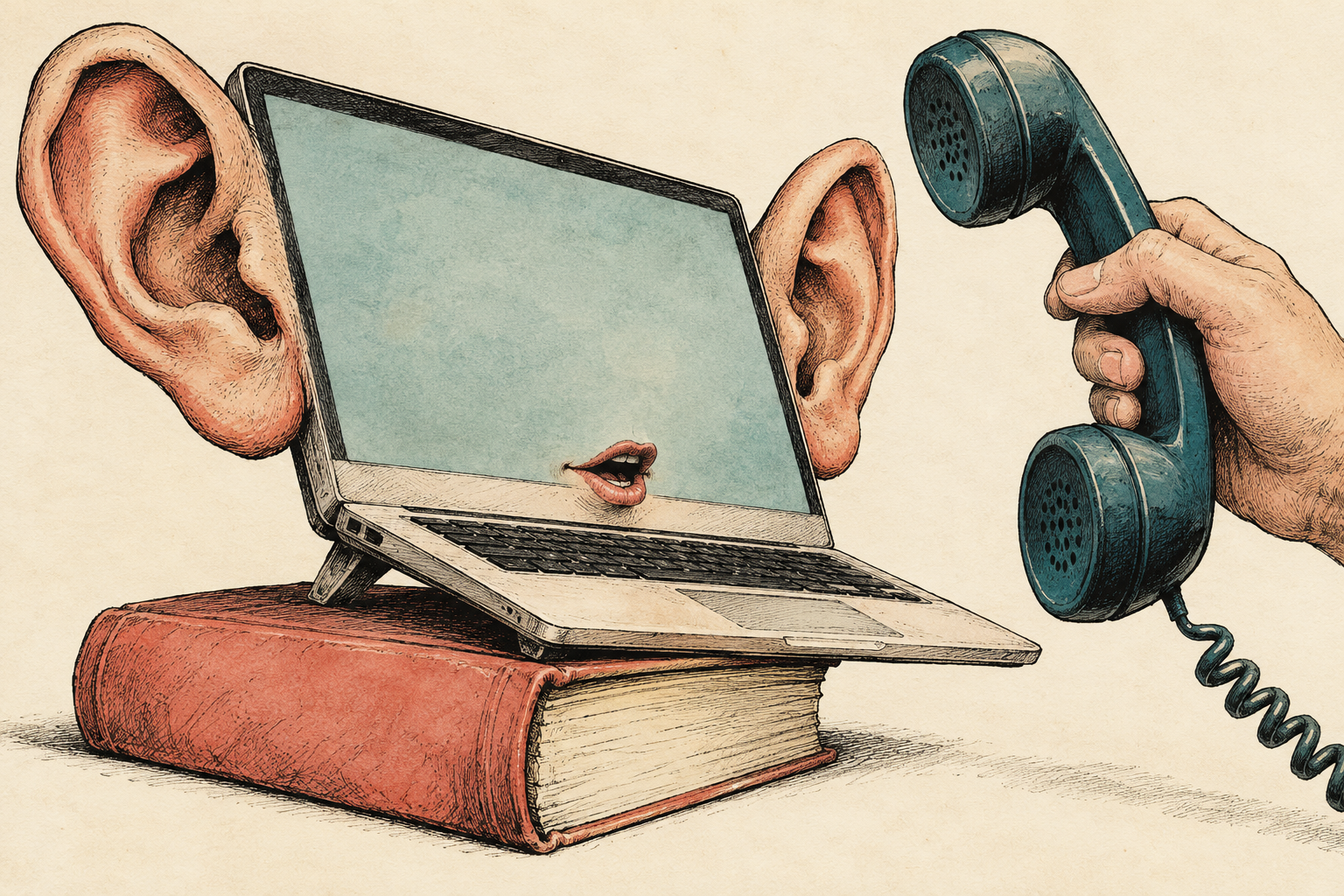
04VOICE & INTERFACESThis laptop has been listening.Block’s Dessa explores conversation learned from sound alone.A laptop with enormous ears talks into a telephone while resting on an unused book. Conceptual illustration, not a product photograph.

Block says it trained Dessa from scratch using human speech, without text or a pretrained model. The system can listen and speak at the same time, allowing interruptions and the little sounds that keep a conversation moving.

The company says inference runs locally on a MacBook Pro with an M4 Max chip or better. Its recordings demonstrate changes in timing and expression, but they are selected company examples, not independent benchmarks.

Early access is being offered to a small group of AI safety researchers. Treat Dessa as research to watch, rather than a generally available assistant you can build a business around today.

The interesting question is broader than a convincing voice: how much meaning gets lost when every sigh, pause and laugh must first become a transcript?
Block’s Dessa research page, checked October 26

Today's good news

A backup protein gets its chance.

Penn Medicine reported on October 26 that a CRISPR-based approach boosted utrophin, a protein that can compensate for missing dystrophin, in a mouse model of Duchenne muscular dystrophy. Treated muscles produced more force and better resisted damage from contraction. The experiments focused on preventing progression; they do not establish a cure or reversal in people. Researchers still need to improve delivery and editing. It is an encouraging early result for a difficult disease, with the next questions clearly in view.

Read the source ↗
Close ×Enlarged comic