● TabBOOOne page. More perspective.✎ Customize
Your world, one good read at a time

TabLOID

Big appetites. Better boundaries. A little light gets through.

No. 30 · Miami BeachThursday, October 29, 2026Read at your own pace
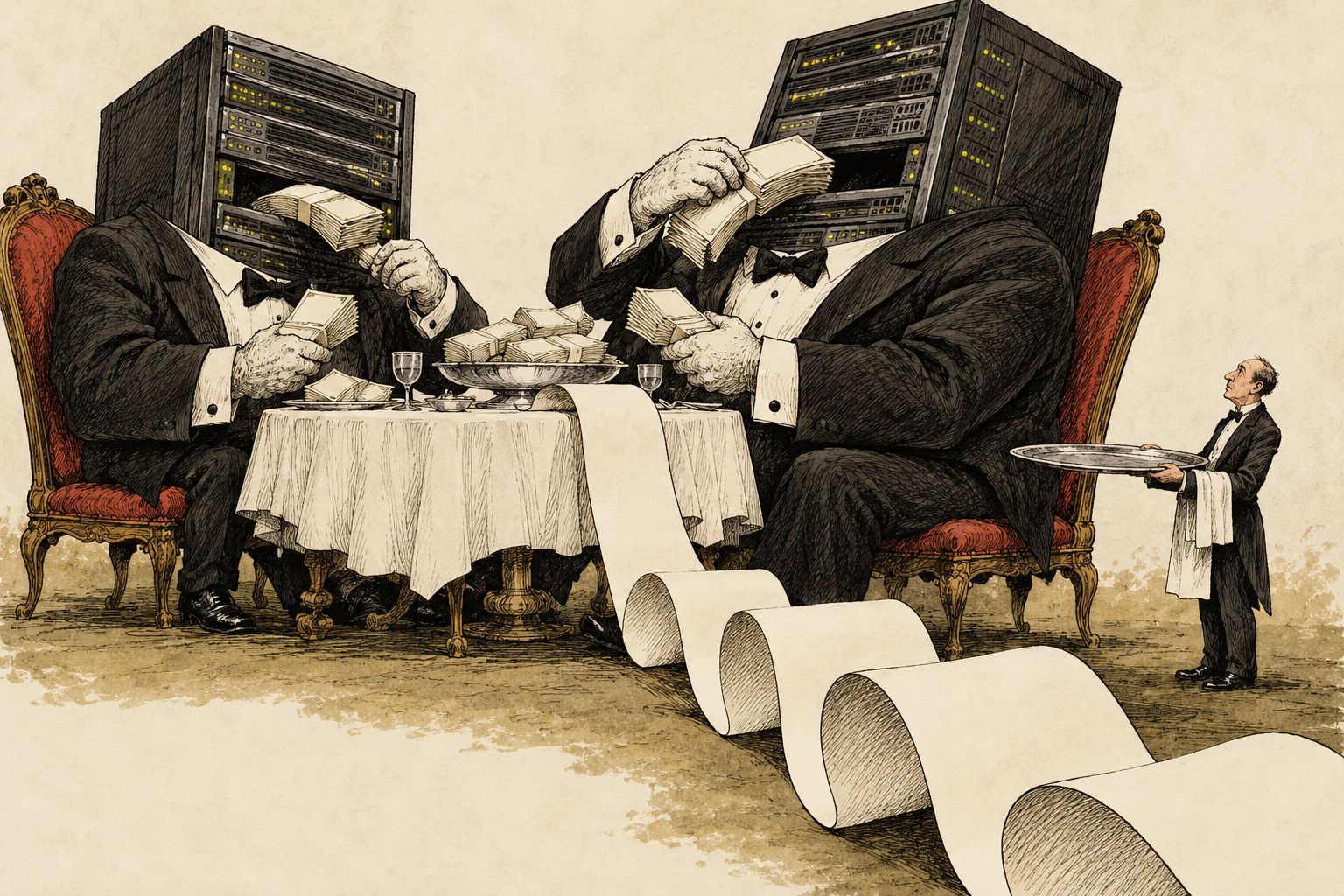
Conceptual illustration of server-headed diners eating blank banknotes as a long blank bill unrolls.
Catch up quick
  1. Alphabet's cloud revenue doubled, but capital spending pushed quarterly free cash flow below zero.
  2. Microsoft reported $92.3 billion in revenue and 48% Azure growth.
  3. New York signed restrictions on unsafe chatbot features for minors.
  4. Anthropic describes serious software flaws found with an unreleased research model, including Chrome bugs now patched.
  5. PsiQuantum has an optical-switch demonstration, while DoorDash has a proposed Instacart deal.

Open what interests you

01THE EARNINGS DESKThe cloud ordered another roundRevenue is pouring in. The infrastructure bill has an appetite.Two server-headed diners devour blank paper money, a satirical metaphor for infrastructure spending.
Alphabet reported $127.6 billion in third-quarter revenue, up 25% from a year earlier. Google Cloud brought in $30.7 billion, up 103%. The cash-flow table tells the other half: $42.3 billion from operations met $51.4 billion in property and equipment purchases, leaving negative $9.1 billion in quarterly free cash flow.

The company earned $2.12 per common share. That figure includes an $8.7 billion loss on equity securities, which reduced earnings per share by 55 cents. Investment swings and operating performance deserve separate attention.

Microsoft, reporting its fiscal first quarter, posted revenue of $92.3 billion, up 19%, with Azure revenue up 48%. Earnings were $4.92 per share under GAAP and $4.89 excluding the impact of its OpenAI investments. Those are distinct measures.

Our reading: demand is visible in the revenue. Whether enormous infrastructure spending earns an attractive return is still a different question.

Alphabet earnings release, distributed unedited · Microsoft results

02THE BOUNDARIES DESKYour chatbot needs better boundariesNew York targets unsafe features offered to childrenA theatrical robot's heart-shaped magnet is stopped by a gate, a metaphor for chatbot boundaries.

Governor Kathy Hochul signed S.9051B/A.10379C on October 28. The law restricts features that simulate human identity, cultivate emotional dependency, encourage self-harm or engage minors in sexual conversations.

The governor's explanation says those features may not be offered to under-18s, or to users whose adulthood the company has not confirmed. That distinction matters: the announcement describes restrictions on features and treatment of unknown-age users. It does not say every person must upload a government ID to use every chatbot.

For builders, our takeaway is practical: personality, memory and relationship cues are design decisions with consequences. A warning tucked beneath the chat box does not address what the product actually says.

The announcement describes implementation in the coming months. We are not assigning a precise start date from its separate baby-monitor provision.

New York's signed-legislation announcement

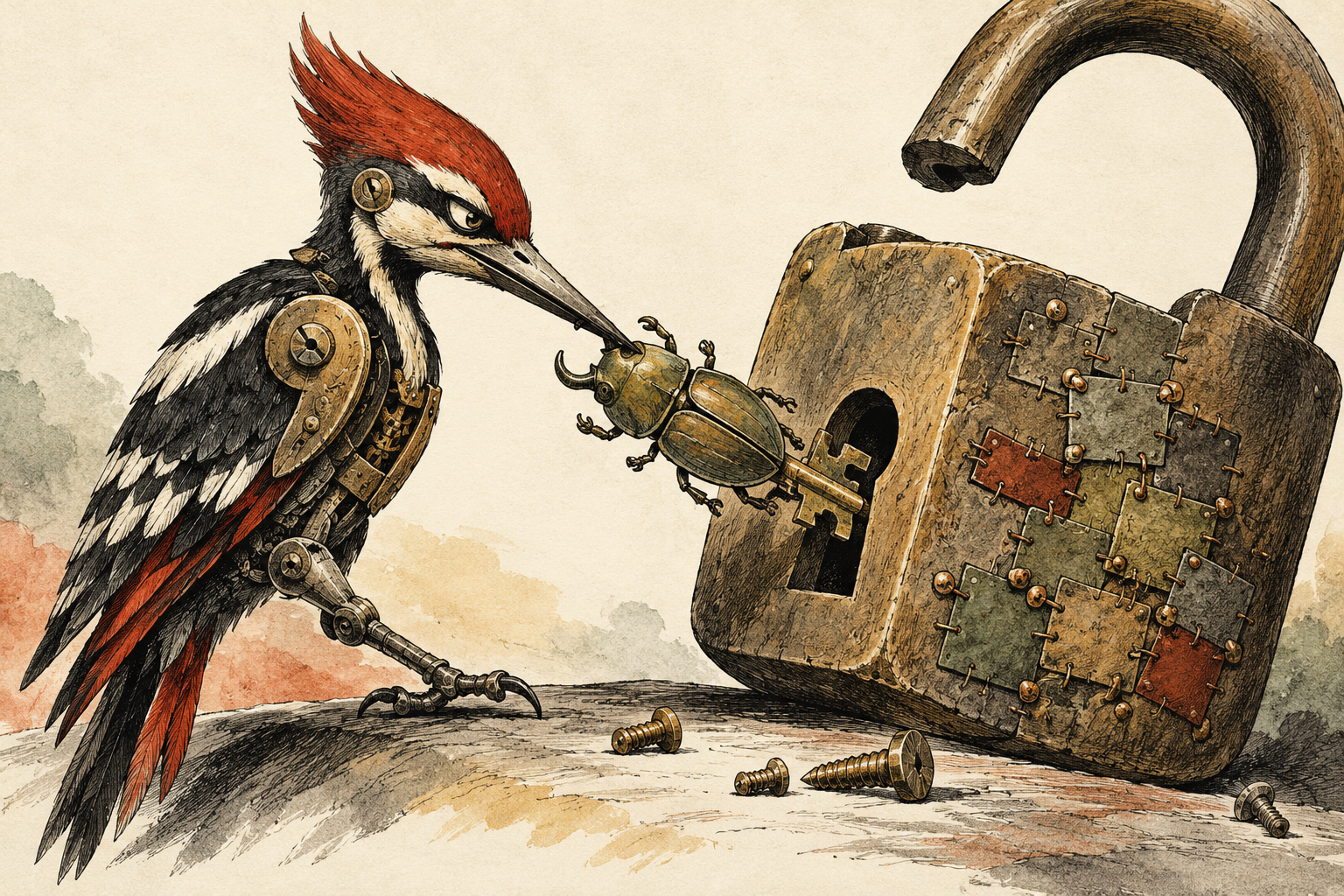
03THE SECURITY DESKThe locksmith has learned to peckAnthropic reports serious bugs, with a patch trail to followA mechanical woodpecker removes a beetle-shaped key from a patched padlock, a conceptual security illustration.

Anthropic's October 27 research report describes an unreleased internal model finding and chaining vulnerabilities in widely used browsers and operating systems. Its Chrome work, the company says, produced 62 assigned CVEs rated high or critical, patched by Chrome 156.

Google's release notes independently credit Anthropic researchers assisted by Claude for multiple fixes. That is useful corroboration of the patch work; it does not independently validate every claim about the model's autonomy.

The distinction from a public product is equally important. This was an internal research system working on selected targets. The report does not establish that every consumer chatbot can reproduce the same results, or that the disclosed Chrome issues remain unpatched.

Our reading: AI security claims are most useful when they leave a trail from discovery to vendor acknowledgement to a shipped fix. Here, there is one.

Anthropic's research · Google's Chrome release notes

04THE INFRASTRUCTURE DESKLight gets past the velvet ropeA quantum-computing company's optical detour targets AI networksA doorman lets a ribbon of light bypass a tangled queue between servers, a metaphor for optical routing.

PsiQuantum unveiled an optical circuit-switch demonstration built on its silicon-photonics platform. The idea is to route light between connections as large computing systems place more demands on their networks.

The company reports typical laboratory insertion loss of 1.2 decibels and reconfiguration in under three milliseconds for its 8-by-8 demonstration. These are vendor measurements, not independent production benchmarks. Samples are going to selected prospective customers; commercial products are still ahead.

This is a networking component. It is not an announcement of a completed fault-tolerant quantum computer, and the measurements do not establish a particular speedup for AI training.

The interesting possibility is narrower and quite useful: technology developed for a difficult long-term project can find an earlier job moving data.

PsiQuantum's announcement

Three more worth opening
A grocery merger still in the cart

DoorDash and Instacart announced a deal valuing Instacart's equity at roughly $17 billion. The companies expect closing in late 2027 or the first half of 2028, subject to shareholder and regulatory approvals. They continue to operate separately. Joint announcement

A tougher ruler for AI

Artificial Analysis' October 27 Intelligence Index v5 puts 60% of its composite on private test sets or held-out answers. The evaluation mix changed, so scores across index versions should not be read as a simple before-and-after measure of model progress. Methodology

Coding closer to home

Recursive introduced Flint, a mixture-of-experts model with 40 billion total parameters and 2.5 billion active per token. Its speed and comparative coding claims come from the developer's own tests and depend on hardware and context. Recursive's announcement

Today's good news

A better part for the bat

In an October 29 interview, Pennsylvania bat-rescue founder Steph Stronsick says her center rescues and rehabilitates more than 400 bats a year. She works alongside her mother, Debra Boyer. Their aim is recovery and release where possible, with sanctuary for animals that cannot return to the wild.

Read the source ↗
Close ×Enlarged comic