● TabBOOOne page. More perspective.✎ Customize
Your world, one good read at a time

TabLOID

Better revisions. Schoolroom keys. A long watch ends.

No. 36 · Miami BeachThursday, November 5, 2026Read at your own pace
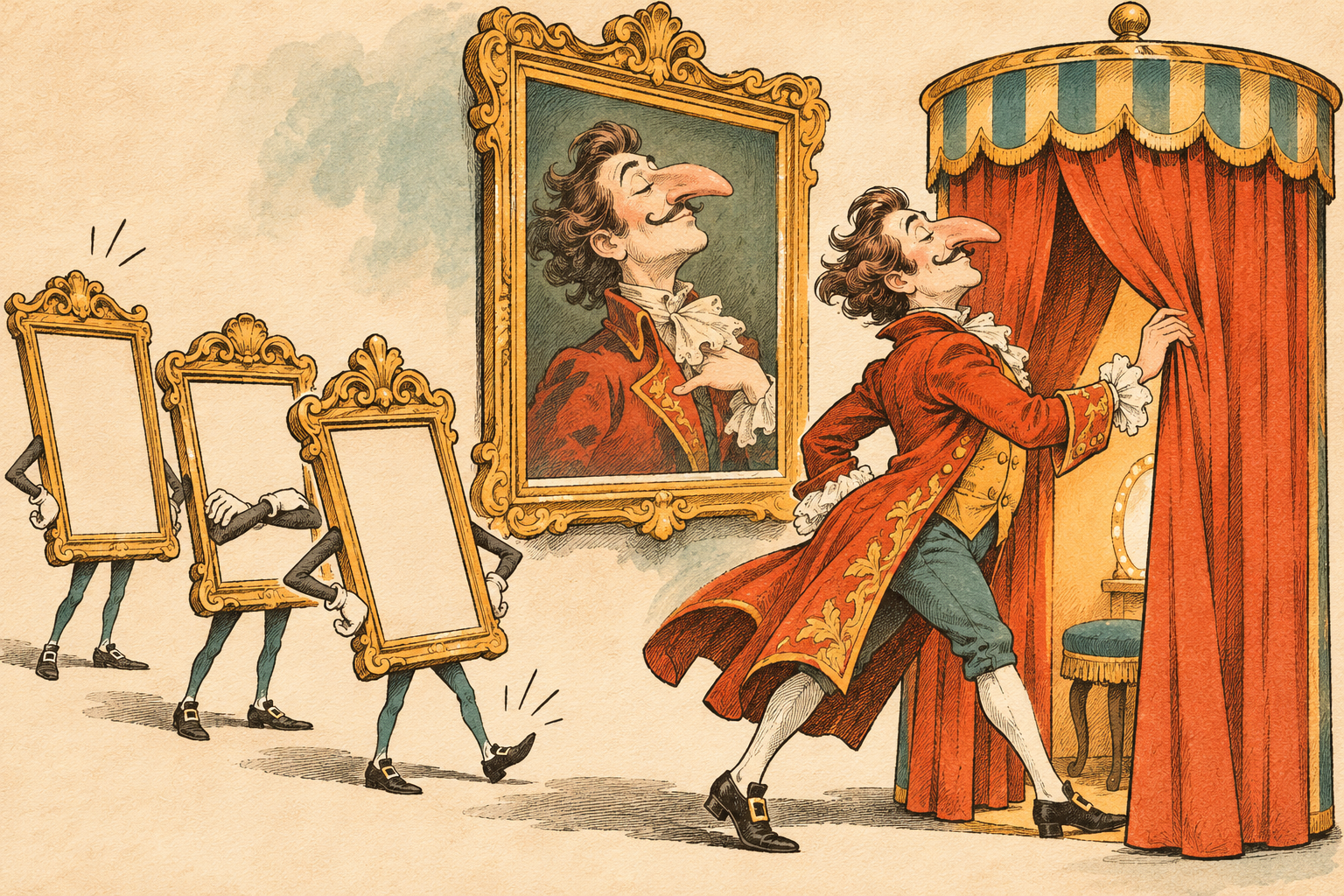
A painted character heads for a changing booth while empty frames queue behind.
Catch up quick
  1. OpenAI's Images 2.6 puts revision, consistency and GIFs on the drawing board.
  2. A proposed Pierre acquisition brings code-review and storage tools closer to Codex.
  3. Google promises school-controlled access while expanding Guided Learning.
  4. Swift's nearly 22-year astronomy mission ends; two medical studies offer useful leads.

Open what interests you

01THE DRAWING BOARDThe portrait would like another fittingImages 2.6 makes the next edit part of the pitch.A vain portrait character steps toward a changing booth, a metaphor for iterative image editing.
OpenAI announced Images 2.6 on November 4 for ChatGPT, Codex and its API. The release emphasizes more consistent images across iterations, tighter control over edits and the ability to make GIFs. OpenAI says generation is 50% faster; that is the company's performance claim, not an independent test.

For developers, the API has two modes: Flare favors fast exploration and layouts, while Sunburst emphasizes detail and consistency. Markup support and SVG exports also give image work more ways into an existing production process.

The useful question is whether a promising first picture survives the next five revisions. Faster generation helps, but keeping the parts you liked may save more time than another immaculate first draft. OpenAI's announcement.
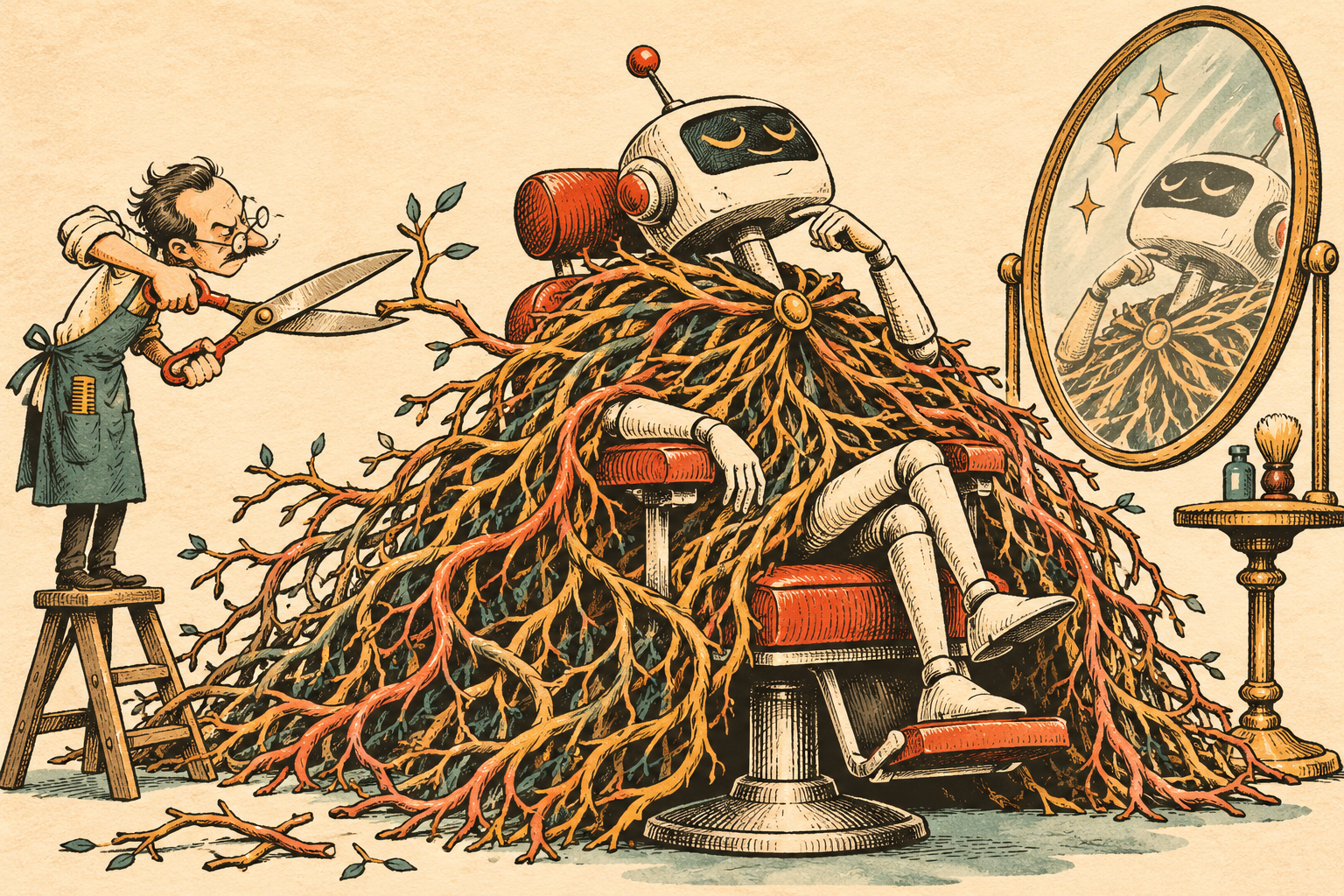
02CODE & COMPANYSomeone still has to trim the branchesOpenAI's proposed Pierre deal targets the work around writing code.A human barber trims a robot's tangled cloak of branches, a metaphor for reviewing generated code.

OpenAI said on November 4 that it plans to acquire Pierre, a company building tools for managing and reviewing code. The deal remains subject to customary closing conditions and regulatory approvals. The companies continue to operate separately until it closes.

Pierre's Trees file browser and Diffs review libraries already appear in Codex. OpenAI says Pierre's Git-based Code Storage service will also become part of its plans for collaborative coding. The announcement says existing Code Storage customers can continue using it and Pierre's open-source projects will remain open source.

Generating another branch is easy to celebrate. Understanding what changed, reviewing it and keeping a team coordinated are less theatrical jobs. They become more valuable as the volume of generated code grows. The acquisition announcement.

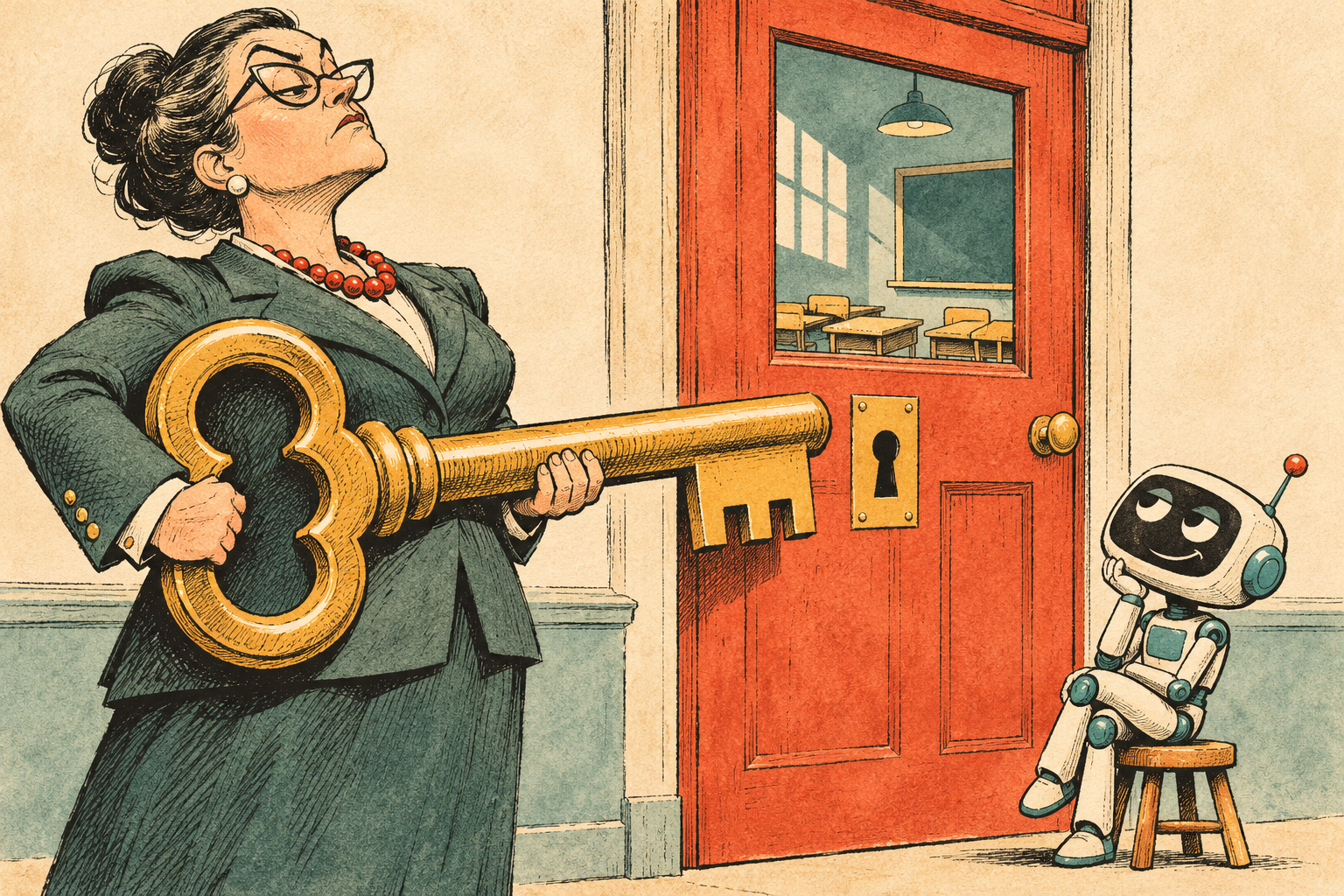
03THE CLASSROOM KEYThe school keeps the keyGoogle outlines access controls alongside new learning tools.An administrator holds a giant key while a mechanical tutor waits outside a classroom.

Google's November 3 education announcement says access to Gemini, Gemini Notebook, Gemini in Classroom and Google Search will be off for K-12 student accounts until administrators explicitly enable the products. Google says further details will arrive in the coming months ahead of rollout.

That is an announced control policy, not evidence that every account has already changed. The announcement does not specify a 2027 deadline or establish the independent switches described in some retellings.

Meanwhile, Guided Learning in Classroom became available globally on November 3. A Search pilot at selected US schools is planned for later this month. The approach uses questions and step-by-step help to guide students through a problem; improved educational outcomes still need to be demonstrated beyond the product announcement. Google's actual update.

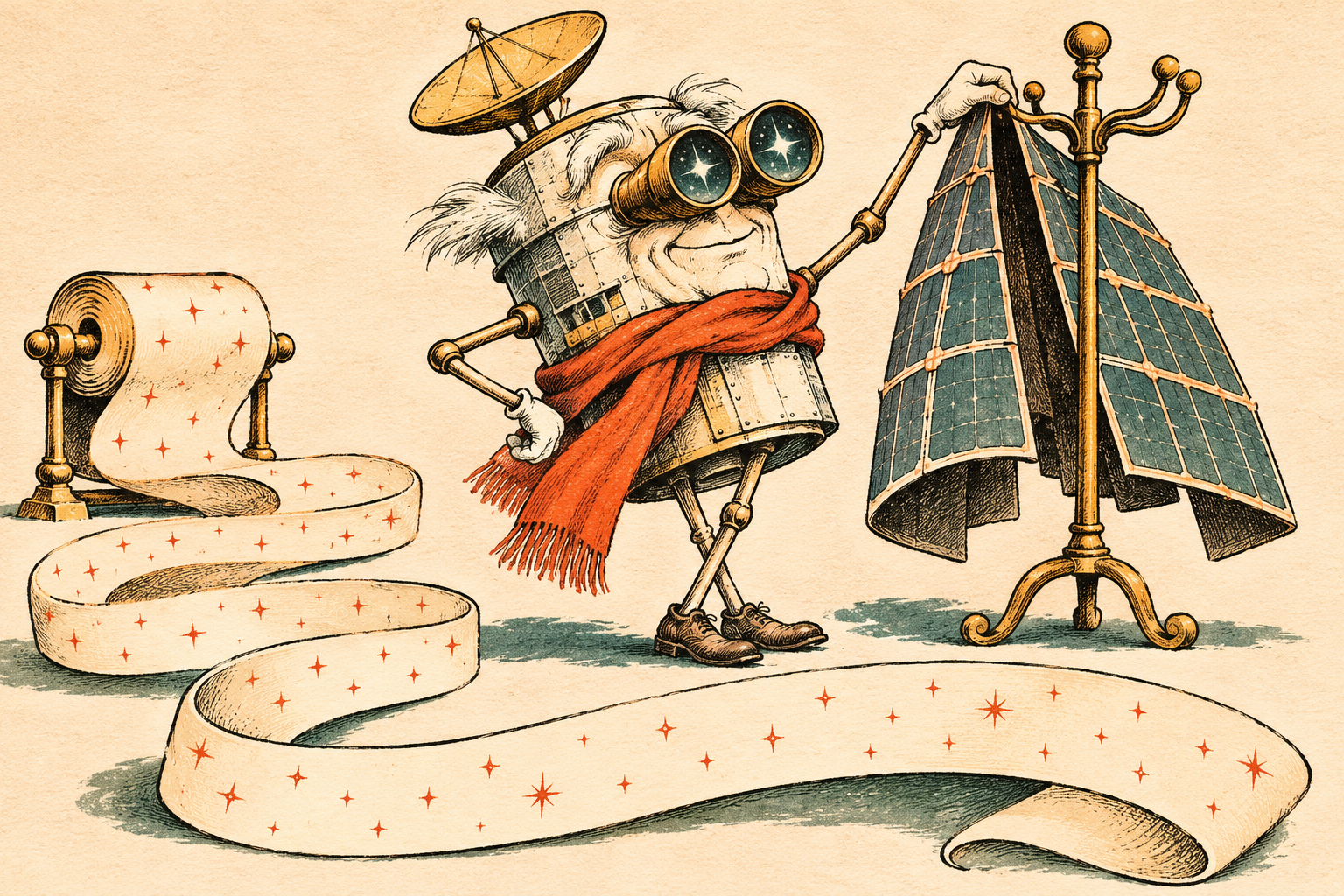
04THE LONG WATCHSwift hangs up its star-studded coatA two-year mission stretched to almost twenty-two.An imaginary satellite hangs up a solar-panel coat beside a long ribbon of stars.

NASA's Neil Gehrels Swift Observatory re-entered Earth's atmosphere on November 4, ending nearly 22 years in orbit. The mission launched in 2004 with a two-year primary assignment and became a rapid responder to gamma-ray bursts and other changing objects in the sky.

Its three telescopes worked across different wavelengths, helping astronomers catch brief events and coordinate follow-up observations. The lasting achievement is a long record of a universe that refuses to sit still.

NASA's updated notice says the US Space Force confirmed re-entry at 7:39 a.m. EST over North Sumatra, Indonesia. Most of the spacecraft was expected to burn up, but some components may have survived. NASA's notice, updated November 4.

Two more worth opening
Siri opens the developers' door

Apple's November 3 Siri Developer Preview lets developers test app content and actions through App Intents in the 27.3 betas for iOS, iPadOS, macOS and visionOS. This is a developer preview; the broader consumer rollout remains ahead. Apple's developer announcement.

AMD's data-center business keeps growing

AMD reported $13.4 billion in third-quarter revenue, including $8.5 billion from its data-center segment, up 97% year over year. The quarter ended September 26 and the results were released November 3. These are company-reported results, not a prediction of future growth. AMD's earnings release.

Today's good news

Old brain scans may have more to tell us

USC researchers reported FOD-Diffusion on November 5, a generative-AI method for estimating missing nerve-fiber information in diffusion MRI scans. It learns patterns from brain imaging and surrounding tissue to help reconstruct incomplete maps. The work used nearly 2,000 participants' scans, with a smaller test of hidden brainstem information. These are estimated reconstructions, not recovered measurements. The researchers still need to test other scanners and settings, and the method has not been evaluated for patient care. The hopeful prospect is making existing research scans more useful without asking every participant to return.

Read the source ↗
More good news

A wrist sensor's possible early warning

Google researchers described a hypertension-screening approach on November 5 that combines optical and motion data from wearables across days. A prospective study at five US sites included 196 participants and compared the model with 24-hour ambulatory blood-pressure monitoring. The aim is to flag a persistent hypertensive state, not produce an exact blood-pressure reading at a particular moment. It remains research requiring further validation, not a stand-alone diagnosis or a replacement for a clinical blood-pressure assessment. Passive signals could eventually help more people notice a condition that often goes unnoticed.

Read the source ↗
Close ×Enlarged comic